The Art of Doing Nothing: Why Not Trading Is Often the Best Trade

The Art of Doing Nothing: Why Not Trading Is Often the Best Trade
"1 trade a day is the way."
This simple comment on r/Daytrading this week got hundreds of traders nodding in agreement. The post that sparked it? A trader sharing their slow start to February and the mental battle of not forcing trades to make it back.
If you've ever felt the pull to trade just because you're sitting at the charts, this one's for you.
The Slow Market Trap
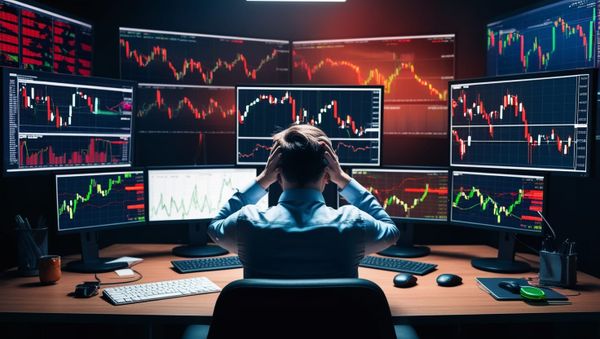
Every trader has been there: the market is cold, your setups aren't appearing, and that voice in your head starts whispering, "Just take something. Anything."
As one trader put it on r/Daytrading recently:
"February started slow for me. A few red days early and more mental pressure than I expected, especially wanting to make it back quicker. I didn't go on tilt or suddenly start overtrading, but that temptation was definitely there."
This is the slow market trap — and it destroys accounts with surgical precision.
The trap works like this:
- Market conditions change (less volatility, choppy action)
- Your normal setups don't appear
- You feel "behind" on your daily/weekly/monthly goals
- You start lowering your standards for entry
- You take marginal trades that would normally be passes
- Those trades lose more often than they win
- Now you're deeper in the hole, with even more pressure to make it back
Sound familiar?
Why Beginners Trade More (And Pros Trade Less)
Here's something counterintuitive: the longer someone has been trading profitably, the fewer trades they typically take.
Why? Because experience teaches you that most of the money in trading comes from not trading.
One comment in the thread nailed it:
"Idk how people are doing 20+ trades a day. The only viable explanations are: treating it like gambling, revenge trading (also kinda gambling), scalpers with algos, or beginners who just haven't realized that for most people less is more."
A beginner on their third week of trading shared their revelation:
"I'm now doing 1-2 trades, shifting to 1 trade a day. Protecting my capital and honestly keeps my sanity. Funny enough those are my highest days so far too."
This isn't a coincidence. Fewer trades means:
- Only taking A+ setups (not B or C grade)
- Lower commission and slippage costs
- Less emotional fatigue
- More mental clarity for the trades you do take
- Better risk management per trade
The First Week of the Month Problem
One trader in the discussion stopped trading the first week of every month entirely:
"First week of the month is always hard for me, that's why I stopped trading it. First week for me it's NFP, where you have almost every day news at 10:00 — just doesn't work for me so I filter it."
This is the kind of self-awareness that separates profitable traders from everyone else. Instead of fighting the market, they simply opt out when conditions don't favor their strategy.
Think about what this requires:
- Tracking when you lose money (not just that you lost)
- Identifying patterns in those losses
- Having the discipline to skip those periods entirely
- Accepting some "missed" opportunities as the cost of avoiding losses
The Psychology Behind Forcing Trades
Why is it so hard to do nothing? Let's break down the psychology:
1. Loss Aversion
After a red day, your brain perceives losses as threats. The fight-or-flight response kicks in, making you want to "fix" the situation immediately. The problem? Trading isn't a problem you solve by doing more. It's often a problem you solve by doing less.2. Sunk Cost Fallacy
You've been sitting at the charts for 2 hours. Your brain tells you that time was "wasted" if you don't trade. So you take a subpar setup to justify the time spent. In reality, that 2 hours of not trading was the trade — protecting your capital when setups weren't there.3. The Dopamine Chase
Trading triggers dopamine whether you win or lose. The anticipation of entering, the emotional rollercoaster of watching price move — your brain wants that hit. Not trading means no dopamine spike. That's why scrolling through timeframes looking for a trade feels productive even when it's actually destructive.4. Identity Protection
Many traders tie their identity to being "a trader." If you're not trading, who are you? This sounds trivial but drives an enormous amount of forced trading. Profitable traders learn to separate identity from activity.What Successful Traders Do Instead
Here's what the traders who survive long-term actually do during slow markets:
They Wait
Not passive, anxious waiting. Active, predatory waiting. Like a lion conserving energy until the perfect moment to strike."I stuck to the same setups I normally trade and let it come back instead of chasing." — The original poster's approach that saved his month
They Review
Slow markets are perfect for reviewing your trade journal, refining your rules, and identifying patterns in your performance. One veteran shared they use slow periods to dig into their data on when they actually make money.They Rest
Mental fatigue is real. The traders who grind through every session without breaks burn out. Those who step away during slow periods come back sharper when conditions improve.They Set Hard Limits
Multiple traders in the discussion mentioned having maximum trades per day locked into their platform:"Most people should definitely have a max trades per day set to their account."
This removes the decision in the moment. You can't force trade #4 if your platform literally won't let you.
The 20-Minute Sweet Spot
One trader shared a fascinating insight about trade duration:
"I have a winrate of 85% on trades 5-20 mins — that seems to be a sweet spot intraday for me too. My trades less than 1 min = 25-35% winrate. I get stopped out hella fast sometimes."
This aligns with what we see across many trading styles: the ultra-short-term scalps have the lowest winrates, while trades held for 5-20 minutes (enough time for a thesis to play out, but not so long you get caught in reversals) tend to perform best for discretionary traders.
If you're taking 50 trades a day with 1-minute holds, the math is working against you.
The Automation Advantage
Here's where things get interesting. What if you could take your psychology completely out of the equation?
Automated trading strategies don't:
- Feel pressure from slow markets
- Chase trades to make up for red days
- Get fatigued after hours of screen time
- Lower their standards for entry
- Experience the dopamine chase that drives overtrading
This is exactly why automated strategies like StealthScalp exist. When you define your exact entry criteria, position sizing, and exit rules in advance — and let a bot execute them — you eliminate the "forcing trades" problem entirely.
The bot doesn't care that February started slow. It doesn't feel behind on its monthly goal. It simply waits for the setup, enters when criteria are met, and exits at the predefined target or stop. No emotion. No forcing.
→ Learn how StealthScalp automates your trading and removes the temptation to force trades
The One Trade Per Day Philosophy
Let's end where we started — with that powerful comment:
"1 trade a day is the way."
Why does this resonate with so many traders?
Because one trade per day means:
- You have to choose the best opportunity, not just any opportunity
- Your psychology stays calm (no recovery mode, no revenge trading)
- Your risk is controlled (one bad trade can't spiral into five)
- Your focus improves (less noise, more signal)
- Your life improves (you're not chained to screens all day)
Even if you don't go full one-trade-per-day, consider these modifications:
- Maximum of 3 trades per day (hard limit in your platform)
- Only trade the first 90 minutes after open
- If your first trade is red, you're done for the day
- If you hit your daily target, you're done for the day
The specific rules matter less than having rules that prevent you from forcing trades when the market isn't giving you what you need.
Action Steps
1. Track When You Lose
Start logging not just P&L, but the conditions around your losses. Time of day, day of week, market conditions (trending vs. choppy), number of trades that day. Look for patterns.
2. Set Hard Limits
Configure your platform to prevent you from taking more than X trades per day. Different platforms have different settings — some brokers offer daily loss limits that shut down trading when hit.
3. Define "No Trade" Days
Based on your data, identify periods you should skip entirely. Maybe it's NFP week. Maybe it's Fridays. Maybe it's the first Monday of the month. Whatever your data tells you.
4. Practice Active Waiting
Reframe not-trading from "doing nothing" to "protecting capital and waiting for the perfect moment." This mental shift makes patience feel productive instead of frustrating.
5. Consider Automation
If you consistently struggle with forcing trades, automated strategies remove you from the equation entirely. Your rules run 24/7 without the emotional interference.
→ See how StealthScalp's one-trade-per-day approach removes the temptation to overtrade
Final Thought
The trader who sparked this whole discussion made it back from a slow February start. Not by trading more. Not by lowering standards. But by sticking to what works and waiting.
That's the boring truth about profitable trading: most of the skill is in not trading.
The market will always be there tomorrow. Your capital needs to be there too.
Related Reading: