Revenge Trading: Why It Destroys Accounts and How to Finally Stop

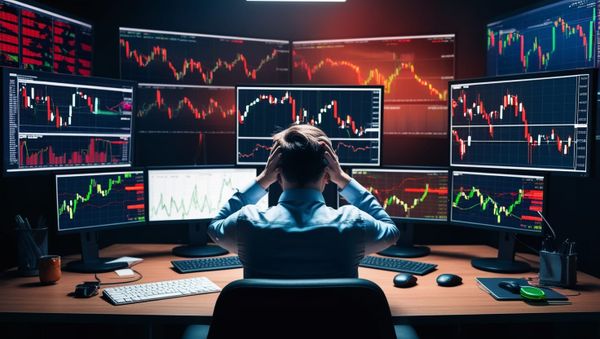
We've all been there. You take a loss. It stings. Your heart rate spikes. And before you know it, you're back in the market—not because you found a good setup, but because you're angry.
This is revenge trading. And it's probably the single biggest reason why profitable traders blow up their accounts.
In this guide, we'll break down what revenge trading is, why it happens, and most importantly—how to stop it before it destroys your trading career.
What Is Revenge Trading?
Revenge trading is when you enter trades driven by emotion rather than strategy. Specifically, it's the impulse to "get back" at the market after a losing trade.
Instead of following your trading plan, you:
- Jump into trades without proper setups
- Increase position size to recover losses faster
- Abandon risk management rules
- Chase price action
- Trade on tilt, not on logic
The result? One bad trade turns into three. Three turns into five. And before you know it, you've wiped out weeks of profits in a single session.
The Classic Revenge Trading Pattern
Here's how it typically unfolds:
Step 1: You take a legitimate stop loss on a good setup. It happens—no big deal.
Step 2: Instead of moving on, you feel frustrated. "I shouldn't have lost that trade."
Step 3: You immediately look for another trade—not based on your strategy, but based on the need to make back that money.
Step 4: That trade also loses (because it wasn't a real setup). Now you're down double.
Step 5: Panic sets in. You increase position size or take even worse setups to "catch up."
Step 6: The account implodes.
Sound familiar?
The Psychology Behind Revenge Trading
Revenge trading isn't a strategy problem. It's a psychology problem. And it's rooted in several cognitive biases that are hardwired into human nature.
Loss Aversion Bias
Humans fear losses more than they value gains. According to behavioral psychology, the pain of losing $500 is roughly twice as intense as the pleasure of gaining $500.
This is why a single loss feels so much worse than a win feels good—and why you're willing to take irrational risks to avoid "locking in" that loss.
The Need to "Be Right"
Trading exposes your ego. When the market goes against you, it feels personal—like the market is proving you wrong.
Revenge trading is your ego's attempt to restore control and prove that you're "right" about the market direction.
Spoiler: The market doesn't care about your ego.
Dopamine and the Gambler's Fallacy
After a loss, your brain craves the dopamine hit of a winning trade. This creates the illusion that a win is "due"—a cognitive bias known as the Gambler's Fallacy.
"I've lost three times in a row, so the next trade HAS to be a winner, right?"
Wrong. Each trade is independent. The market doesn't owe you anything.
Fight-or-Flight Response
When you take a loss, your body triggers a stress response. Cortisol floods your system. Your heart rate increases. Your decision-making shifts from logical to emotional.
In this state, you're not thinking clearly. You're in survival mode—and survival mode is terrible for trading.
Why Revenge Trading Destroys Accounts
Here's the brutal truth: Revenge trading has a 100% failure rate over the long term.
Why? Because it breaks every rule of successful trading:
1. It Abandons Risk Management
When revenge trading, you're no longer thinking about risk-reward ratios or position sizing. You're thinking about how fast you can make back your loss.
This often leads to:
- Doubling or tripling position size
- Widening stop losses (or removing them entirely)
- Holding losing trades too long
And that's how small losses become catastrophic ones.
2. It Creates a Vicious Cycle
Revenge trading feeds on itself. Each additional loss intensifies the emotional response, making it even harder to stop.
You're not just fighting the market—you're fighting yourself. And you can't win that battle while actively trading.
3. It Reinforces Bad Habits
Even if you occasionally "get lucky" and recover with a revenge trade, you're teaching your brain the wrong lesson:
"See? Emotional, impulsive trading CAN work!"
This makes the behavior harder to break in the future—even when it inevitably blows up your account.
4. It Destroys Confidence
After a revenge trading session, you're not just down money. You're down confidence.
You know you broke your rules. You know you traded emotionally. And now you don't trust yourself.
This erosion of confidence makes it even harder to follow your plan in the future.
Warning Signs You're Revenge Trading
Sometimes revenge trading is obvious. Other times, it's subtle. Here are the red flags:
Immediate Red Flags
- You enter a trade within seconds of closing a loser — No time to reset = emotional decision
- You're thinking "I need to make this back" — Strategy-driven traders don't think this way
- You increase position size after a loss — This is martingale-style gambling, not trading
- You skip your checklist or setup criteria — "It's good enough, I need to get back in"
- You feel angry at the market — The market can't be "wrong." Only your execution can be.
Subtle Warning Signs
- Trading more frequently than usual after a loss
- Feeling a sense of urgency or pressure to "catch up"
- Rationalizing bad setups that you'd normally skip
- Checking your P&L obsessively
- Justifying "just one more trade" when you should be done
If you recognize any of these patterns, you're at risk for revenge trading—or already doing it.
How to Stop Revenge Trading (Practical Strategies)
Awareness is the first step. But awareness alone won't stop you from clicking "Buy" when your emotions are running hot.
Here's what actually works:
Strategy 1: Implement a "Loss Limit" Rule
Set a hard stop for the day after a certain number of losses OR a dollar amount.
Examples:
- "After 2 losses, I'm done for the day."
- "If I'm down $200, I close the platform."
This removes the decision-making. You're not asking yourself "Should I keep trading?" You're following a rule.
Pro tip: Use NinjaTrader's daily loss limit settings to enforce this automatically.
Strategy 2: Take a Mandatory Break After Every Loss
Do NOT enter another trade immediately after a loss. Ever.
Instead:
- Walk away from your screens for 5-10 minutes
- Get water, stretch, step outside
- Reset your emotional state before evaluating the next setup
If a setup is truly high-quality, it will still be there when you get back. If it's not—it wasn't a real setup anyway.
Strategy 3: Keep a Trading Journal (Especially for Losses)
After every loss, write down:
- What the setup was
- Why you took the trade
- How you felt before, during, and after
- Whether the loss was the result of following your plan (acceptable) or breaking it (unacceptable)
This simple act creates a pause between the loss and your next decision—and often prevents emotional trading.
Strategy 4: Focus on Process, Not Profit
Revenge trading happens when you're fixated on results instead of execution.
Reframe how you measure success:
- Did you follow your plan? ✅
- Did you manage risk properly? ✅
- Did you take only A+ setups? ✅
If yes, then it was a successful trading day—even if you took a loss.
Profits are the byproduct of good process repeated over time. Not the goal of every individual trade.
Strategy 5: Use Automation to Remove Emotion
Here's the uncomfortable truth: As long as you are making the decision to enter trades, revenge trading is always a risk.
Because humans are emotional. We get frustrated. We get greedy. We get desperate.
That's where automation changes everything.
→ Trinity Trading's StealthScalp is a fully automated NinjaTrader strategy that removes you from the decision-making process entirely. It takes one trade per day based on a proven algorithm—not your emotions.
No revenge trading. No overtrading. No emotional spiral. Just consistent execution.
→ Learn more about StealthScalp automation
Strategy 6: Reduce Position Size After Losses
If you absolutely must keep trading after a loss, do the opposite of revenge trading:
Cut your position size in half.
This forces you to rebuild confidence slowly and keeps risk minimal while your emotions stabilize.
Strategy 7: Have an Accountability Partner
Tell someone your daily loss limit. A fellow trader, a coach, or even a friend.
When you're accountable to someone else, you're less likely to break your own rules.
What Professional Traders Do Differently
Professional traders don't avoid losses. They accept them as part of the game.
Here's what separates pros from amateurs:
Pros Expect Losses
They know that even a 60% win rate means 40% of trades will lose. Losses are built into their model.
Pros Detach Emotionally
A loss is just data. It's feedback on execution, not a reflection of self-worth.
Pros Have Systems
They don't rely on willpower to avoid revenge trading. They have rules, structures, and automation in place.
Pros Know When to Stop
The best traders know when they're off their game—and they have the discipline to walk away before it gets worse.
The Bottom Line: Revenge Trading Is a Choice
Here's the hard truth: You can't control the market. But you can control yourself.
Revenge trading feels like an uncontrollable impulse. But it's not. It's a choice you make in the moment—and you can choose differently.
Will it be easy? No. Breaking emotional patterns never is.
But if you implement even half of the strategies in this guide, you'll be miles ahead of most traders who let emotion dictate their decisions.
And if you want to remove emotion from the equation entirely, automated trading systems like StealthScalp do exactly that—one high-probability trade per day, zero emotional interference.
→ Explore StealthScalp automation
Trading involves significant risk. No strategy eliminates losses. Always practice proper risk management.