Stop Doing What the 90% Are Doing: 6 Myths That Keep Traders Stuck

If you want to be part of the 10% of traders who actually make it, here's an uncomfortable truth: you need to stop doing what everyone else is doing.
The 90% failure rate isn't a myth. Research from brokerage data and multiple studies consistently shows that 70-90% of retail traders lose money over time. A 2025 study found that between 74% and 89% of retail investors lost money during every major volatility event — and that rate hasn't changed in nearly three decades.
So why does the failure rate stay so stubbornly high despite more free education than ever?
Because most traders are consuming content from professional YouTubers who happen to trade — not professional traders who happen to share content. There's a massive difference.
As one experienced trader put it on r/Daytrading this week: "The people who are great YouTube marketers realize they can market to this crowd with promises that they can learn to trade easily and simply, with just technical analysis, in 6 months or even 3 months. Great marketing. Really selling the dream. But they are not traders."
Let's break down the specific myths keeping you in the 90%.
Myth #1: You Can Learn Trading in 3-6 Months
This is the most profitable lie in the trading education industry.
The reality: The best learning environments see traders becoming consistently profitable in 2-3 years — and that's in an ideal, supported environment. For most self-taught traders working alone, it takes longer.
Has anyone done it faster? Yes. Maybe 1 in 10 million. And even they'll admit their learning curve didn't end at month six.
Here's what experienced traders want you to understand: coming to the markets with a 3-6 month timeline isn't a strategy — it's a setup for failure. You'll either quit too early or take on way too much risk trying to force results on a fantasy timeline.
The mindset shift: Even if it takes you 3-5 years, your future self will thank you for sticking with it. Trading is a skill that compounds over decades. The person who spent 3 years learning properly will massively outperform the person who blew up 10 accounts trying to speed-run their education.
Myth #2: You Just Need Technical Analysis
Scroll through trading Twitter. Watch the popular YouTube channels. You'll see the same message everywhere: all you need is some candlestick patterns, support/resistance, and maybe a few indicators.
The reality: Trading in the markets is, by definition, decision-making in a low-information environment. Any extra information you can get is helpful.
This isn't a hard rule — some traders do trade purely on technicals. But they're the exception, not the rule. And even they typically have deep context about market structure, session timing, and news catalysts that they've internalized over years.
What the 10% actually do:
- Understand macro context (Fed policy, earnings seasons, geopolitical events)
- Know their instrument's specific behavior patterns
- Track order flow or volume profile for confirmation
- Recognize when market conditions favor their strategy — and when they don't
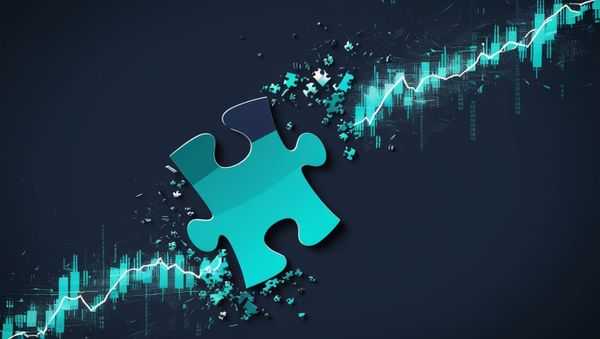
Technical analysis is a piece of the puzzle. Treating it as the entire puzzle is why so many traders get chopped up in sideways markets or blindsided by news-driven moves.
Myth #3: Fix Your Psychology and You'll Trade Successfully
"Trading is 80% psychology."
You've heard this a thousand times. And it's technically true — but probably not in the way you think.
The reality: Psychology matters more later, once you're already consistently profitable. The psychology problems most beginners face aren't actually psychology problems — they're strategy problems, process problems, or environment problems disguised as psychology.
If you're struggling with FOMO, revenge trading, or fear of pulling the trigger, the answer isn't more meditation or trading psychology books. The answer is usually:
- You don't have a tested edge. Without backtesting and forward testing, every trade feels uncertain because it is uncertain.
- You haven't created an environment for strong psychology. Real confidence comes from statistical validation, not willpower.
- You're trading too large. When position sizing terrifies you, you'll make terrible decisions.
What actually creates good trading psychology:
- Backtesting your strategy to know your win rate and expectancy
- Forward testing to see how your edge performs in live markets
- Using that data to train your mind to recognize your setups
- Having a process that removes the need for real-time decisions
When you have a statistically validated edge and proper risk management, the "psychology" largely takes care of itself.
Myth #4: "Doing the Work" Means Screen Time
This one destroys more traders than almost any other misconception.
The myth: Show up in front of the markets every day. Watch every candle develop on your 1-minute or 15-minute chart. Grind out sessions. More hours = more learning.
The reality: "Doing the work" is backtesting and forward testing. It's reviewing and refining a strategy. It's tracking trades and analyzing what works.
You can't hire out your backtesting. You can't buy a subscription to replace the work of tracking your own trades. The process of manually reviewing and logging trades is what trains the discretionary side of your brain to see patterns.
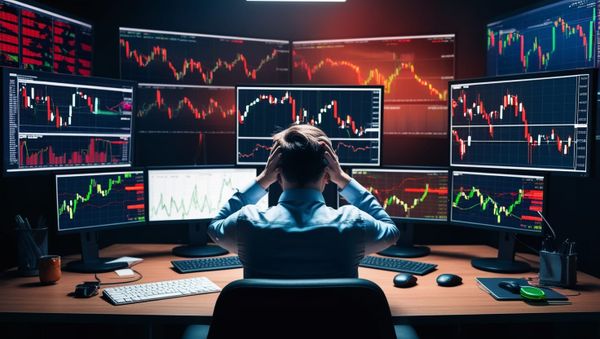
Staring at charts while trades run? That's not work. That's anxiety-inducing entertainment that actively damages your decision-making.
The 10% approach:
- Spend 70% of "trading time" on preparation, review, and strategy refinement
- Spend 30% on actual trading
- Track every trade religiously
- Review weekly to spot patterns in your behavior and results
Myth #5: Watching Your Trade Helps You Manage It
For scalpers taking 30-second to 2-minute trades, watching makes sense. For everyone else?
Watching your trade is hurting you.
Here's the brutal truth: once you enter a trade, you have almost no control. There are only two actions available to you — buy or sell. That's it. No amount of staring, hoping, or "reading the tape" changes the outcome.
Why watching destroys your performance:
- Your brain generates emotions that cloud judgment
- You're tempted to move stops or take profits early
- Small pullbacks feel like disasters
- Winners get cut short because you "want to lock in gains"
- Losers get held because "it might come back"
What the 10% do instead:
- Define the setup with specific entry, stop, and target before entering
- Enter the trade
- Walk away or switch to a different activity
- Let the trade hit stop or target without intervention
This is where automation becomes invaluable. When a system executes your plan without emotion, there's no opportunity to self-sabotage.
→ StealthScalp executes one fully automated trade per day — no watching, no second-guessing, no manual intervention. Learn how automation removes the temptation to manage losers.
Myth #6: Your Winning Streak Ended Because of Psychology
You've been there. Crushing it for two months. Green day after green day. Then suddenly, nothing works. You start losing. You think, "I just need to get my head right and I'll get it back."
This thinking will spiral you into disaster.
The reality: Markets are cyclical. Most retail trading strategies are high-octane approaches designed to grow small accounts — and these strategies naturally have supportive environments and unsupportive environments.
Translation: They work incredibly well sometimes and don't work at all other times.
Where most traders go wrong is thinking they need to fix their psychology to regain their edge. But the "fix" isn't psychological — it's recognizing that market conditions changed.
The data-driven approach:
- When your winning streak ends, go back to your trading journal
- Review the last 50-100 trades
- Look for what changed — in you and in the market
- You'll likely discover that certain conditions (volatility, trend strength, session behavior) were present during your winning streak and absent afterward
The actual fix: Identify when to participate and when to sit out. Develop rules for recognizing your favorable market conditions. And when those conditions aren't present, reduce size or stop trading entirely.
Believing "it's just psychology" causes traders to push harder when they should be pulling back. This is how small drawdowns become account-destroying spirals.
Who Should You Actually Learn From?
This is where the rubber meets the road. If YouTube influencers aren't the answer, who is?
Real traders who've been profitable for decades aren't typically social media personalities — because they were busy trading, not building audiences. But a few legends have remained active and share genuine insights:
Linda Raschke — One of the true Market Wizards, featured in Jack Schwager's legendary books. She managed a hedge fund professionally for years and continues trading in semi-retirement. Active on X (Twitter).
Peter Brandt — Highlighted in the Market Wizards series. Has been a successful trader for five decades. Active on X with interviews available on YouTube.
Michael Martins — Active fund manager who has traded alongside some of the legends mentioned above. Has a YouTube channel dedicated to sharing free trading information.
The distinction is clear: these people became professionals at trading, then decided to share. Others became professionals at YouTube marketing and occasionally trade. Know the difference.
The Path Forward
Learning to trade isn't a mystery. It's hard work over time. Here's the realistic version:
- Expect a 2-3 year minimum timeline to consistent profitability
- Do the actual work — backtest, forward test, journal, review
- Learn more than just technicals — understand the context your strategy operates in
- Create systems that support good psychology instead of relying on willpower
- Stop watching your trades — define your plan and let it execute
- Recognize market cycles — your edge will come and go, and that's normal
And perhaps most importantly: Stop consuming content from people whose primary skill is content creation. Find the real traders — the ones who have nothing to sell but their experience — and study them.
→ Ready to remove yourself from the equation entirely? StealthScalp automates the entire trading process — one trade per day, ICT-inspired logic, no emotional interference. See how it works →
The 90% failure rate isn't some mysterious force. It's the predictable result of traders following advice from the wrong sources, operating on fantasy timelines, and misunderstanding what the work actually looks like.
Now you know what the 10% know.
The question is: will you do what they do?