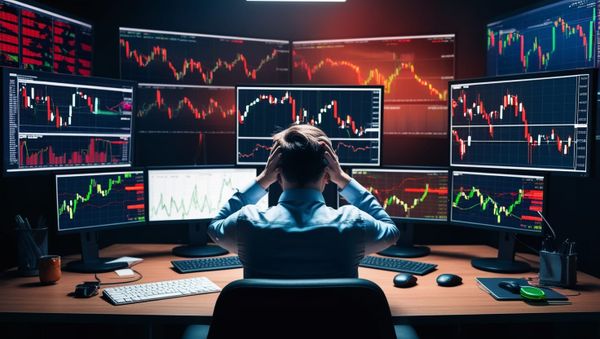
The Win Streak Paradox: Why Chasing Perfect Trading Days Hurts Your P&L


A futures trader recently went viral on Reddit for an impressive achievement: 93 consecutive green trading days. Five months without closing a single day in the red. Nearly 600 trades with a 75% win rate. The kind of streak that makes new traders dream and experienced traders skeptical.
But here's where it gets interesting. The trader's advice?
"Would I recommend anyone trying to achieve such a long green streak? Unironically—No."
This counterintuitive confession sparked thousands of comments and revealed one of trading's most overlooked psychological traps: the streak paradox.
When Winning Becomes a Prison
The trader admitted that maintaining the streak had caused real damage to their trading:
- Missing quality setups because "I don't want to risk losing the green streak"
- Undersizing A+ trades that deserved larger position sizes
- Cutting winners early just to lock in another green day
- Breaking their own rules to "work back" from intraday drawdowns
"I'm quite confident that my $ PNL would be lot higher if I would remove this green streak from my psychology and execution," they wrote.
Read that again. A trader with a verified 93-day winning streak believes they'd make more money without it.
The Perfectionism Trap
What this trader stumbled upon is well-documented in trading psychology: perfectionism often hurts performance more than it helps.
Research shows that perfectionist traders tend to:
- Experience more pain from losses than satisfaction from wins
- Turn winning trades into psychological losses by focusing on what could have been better
- Develop attachment to metrics (like streaks) that feel good but don't maximize returns
- Make decisions based on protecting their record rather than maximizing expected value
The trading goal isn't a perfect track record. It's maximum risk-adjusted returns over time. These are not the same thing.
The Real Cost of Streak Protection
Let's break down what streak-protection psychology actually costs:
1. Reduced Position Sizing on Best Setups
When you're protecting a streak, you subconsciously cap your risk even on A+ setups. That 15R trade you should have sized into becomes a 3R winner because you "didn't want to risk the streak." The math is brutal—your best trades get neutered.
2. Premature Profit Taking
The moment you're green on the day, streak psychology whispers: "Why risk it?" So you close at +$50 when the trade had +$300 of room. Across hundreds of trades, this leaving money on the table compounds into serious underperformance.
3. Forcing Recovery Trades
When you're down intraday, streak protection creates desperation. You take marginal setups just to get back to green. You break your rules. Ironically, this increases the probability of the very red day you're trying to avoid.
4. Opportunity Cost
Mental energy spent protecting a streak is energy not spent on actually trading well. The cognitive load of "must stay green" interferes with pattern recognition and disciplined execution.
What Actually Builds Long-Term Success
The streak trader got a lot right on the path to consistency:
- "Boring" trading—waiting hours for quality setups instead of forcing action
- Small position sizes—caring about having an account tomorrow more than big daily wins
- Fixed trading hours—knowing from data which times work best for their style
- Wide stops at structure—exits based on idea invalidation, not arbitrary dollar amounts
Notice what's not on this list? Streaks. Win rates. Daily green requirements.
The practices that built consistency are process-focused. The thing hurting performance is outcome-focused.
How Automation Solves This
Here's an angle the Reddit community didn't explore: automation completely eliminates streak psychology.
A trading bot doesn't:
- Care whether yesterday was green or red
- Feel attachment to arbitrary metrics
- Undersize trades to protect emotional records
- Cut winners early because it's "ahead enough"
- Force recovery trades out of desperation
Every trade gets executed exactly according to the system. Position sizing follows the rules regardless of prior results. Exits happen at predetermined levels, not when fear or greed intervenes.
This is why professional trading operations increasingly rely on systematic execution. It's not that humans can't trade—it's that humans can't help being human. Our psychology evolved for survival on the savanna, not rational capital allocation.
The Permission to Lose
Perhaps the most valuable lesson from this trader's confession: you need permission to have red days.
Not permission to be reckless. Not permission to abandon risk management. Permission to execute your edge properly even when it results in a losing day.
Because here's the truth: if your strategy has a 60% win rate on trades, and you properly size each trade, some days will be red. That's math, not failure. Trying to avoid all red days means either:
- Taking suboptimal actions to force green results, or
- Missing trades that don't feel "safe enough" for the streak
Both cost you money in the long run.
The Takeaway
That 93-day streak trader gave us a gift: honest transparency about success's hidden costs. They showed us that even exceptional results can come with psychological baggage that limits further growth.
The lesson isn't that streaks are bad or that winning is a problem. The lesson is that attachment to outcome metrics—however impressive—can interfere with the process that created them.
Focus on:
- Process execution, not daily results
- Expected value, not win rate
- Risk-adjusted returns, not streak length
- Systematic discipline, not emotional record-keeping
Whether you trade manually or use automation, the principle is the same: let go of needing every day to be green. Execute your edge. Trust the math. The results will follow.
As the streak trader themselves admitted: normal trading without the psychological burden would probably make them more money anyway.