Why Your Strategy Stops Working Sometimes (And When You Should Just Sit Out)

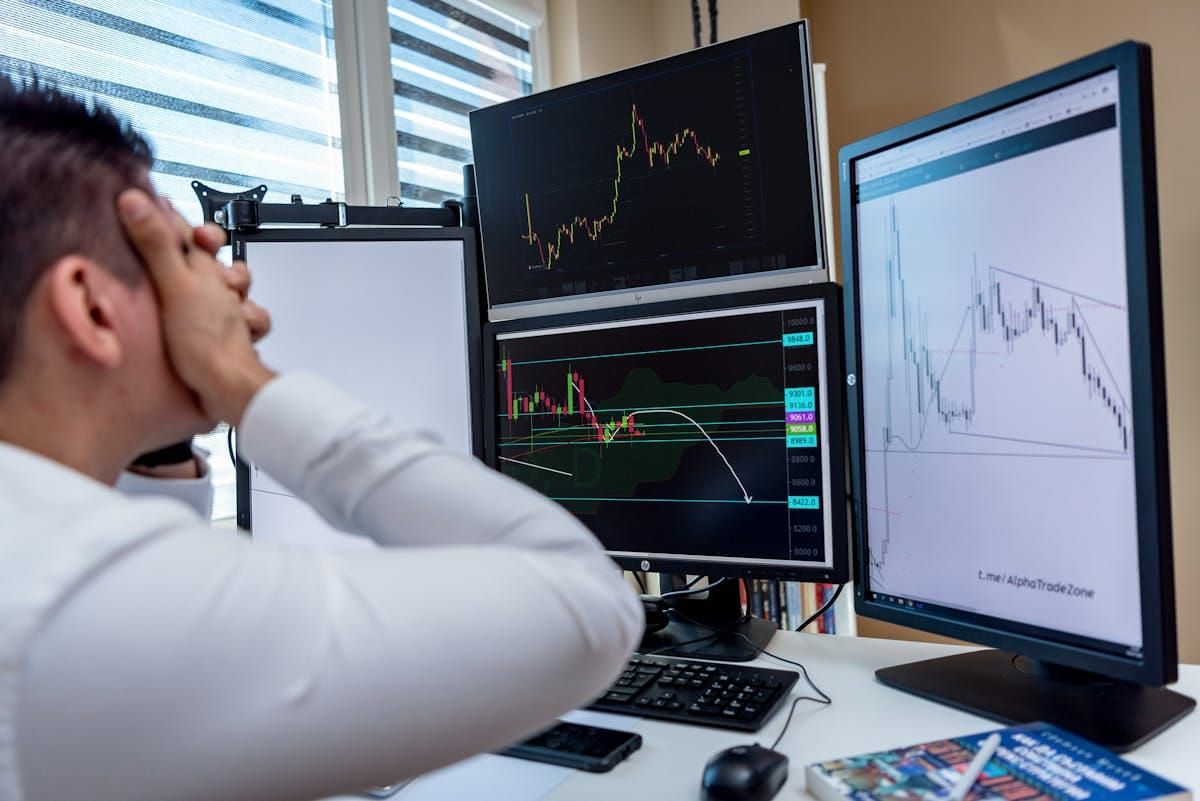
You followed your checklist. You took the setup. You got chopped to pieces anyway.
If this sounds familiar, you're not alone. On Reddit this week, a futures trader asked the question that's been haunting traders for months: "Is price action just garbage, or am I doing something wrong?"
The top comment nailed it: "We have FOMC, contract rollovers, and triple witching all in the same week. Price action has sucked for a while, but it's going to especially suck this week."
Another trader with a "heavily tested strategy with checklist" admitted their expectancy has been underperforming for the past 2-4 weeks. And yet another observed: "PA has been terrible for months, as the indices have been stuck in a range since October. This market is chopping up a lot of people."
Here's the uncomfortable truth: your strategy isn't broken. The market just changed.
The Market Regime Problem Nobody Warned You About
Every trading strategy is designed to exploit specific market conditions. Trend-following strategies print money when markets are trending. Mean-reversion strategies thrive in ranges. Breakout strategies crush it during expansion phases.
But here's the problem: markets constantly shift between regimes, and your strategy doesn't send you a notification when its optimal conditions disappear.
What happens instead is more insidious:
- Your setup appears as usual
- You take the trade per your rules
- Price stalls, chops around, and stops you out
- You check your entry — it was valid
- You start questioning everything
This isn't strategy failure. It's regime mismatch.
Why Choppy Markets Destroy Even Good Strategies
Choppy markets have specific characteristics that murder strategies designed for trending conditions:
1. Moves are smaller. The same setup that would run 2-3R in a trending market might cap out at 0.5R before reversing. Your stop gets hit on the pullback instead of riding the continuation.
2. False breakouts multiply. Every level that "should" break just sweeps liquidity and reverses. Your breakout entries become stop hunts.
3. Stops are too tight for the noise. What works as a stop in a clean trend gets triggered 5 times in a choppy session. ATR expands, volatility increases, but direction remains unclear.
4. The chop compounds psychologically. After 3-4 stop-outs in a row, even disciplined traders start hesitating on valid setups or revenge trading to make it back.
As one study of trading systems found: "A trading system rarely stops working without a reason. More often, performance shifts because market conditions changed."
This is the regime problem in action.
How to Recognize When Markets Are Chopping
Before you can adapt, you need to recognize the environment. Here are the warning signs:
Calendar Warning Signs
- FOMC weeks — Interest rate decisions create uncertainty. Markets often compress before announcements, then whipsaw after.
- Contract rollover weeks — For futures traders, the days around expiration (like March quad witching) see reduced liquidity in the front month and erratic price action.
- Triple/Quadruple witching — When stock options, stock index futures, and stock index options all expire on the same day, expect chaos.
- Major economic releases — NFP weeks, CPI days, and earnings seasons all create regime shifts.
Technical Warning Signs
- Narrow range days increasing — If the average daily range is compressing while price goes nowhere, the market is consolidating.
- Failed breakouts on both sides — Price breaks above resistance, fails, breaks below support, fails. This is classic chop.
- Choppiness Index above 61.8 — Technical indicators like the Dreiss Choppiness Index can quantify the chop.
- Timeframe disagreement — The 4-hour shows bullish, the daily shows bearish, the weekly shows neutral. When timeframes conflict, expect indecision.
Anecdotal Warning Signs
- Reddit is full of frustrated traders — When multiple experienced traders are asking "Is it just me?" — it's not just them.
- Your P&L is death by a thousand cuts — Not one big loss, but constant small losses that add up.
- Every setup looks right but feels wrong — Your gut knows something is off even when the checklist says go.
What to Do When Markets Turn Against Your Edge
You have three options when you recognize a regime shift:
Option 1: Sit Out Entirely
This is the most underrated skill in trading.
As one trader put it: "If you're unsure, you can either just sit out or size way down. But there really hasn't been much continuation in the markets and it's been frustrating for a lot of people."
Sitting out is a trade. It's a position: long cash. And sometimes it's the highest-expectancy position available.
Consider this: If your edge disappears in choppy conditions, every trade you take is essentially gambling. You're not trading your strategy — you're trading hope.
The math is brutal: If your strategy has 0 expectancy in this regime (or negative expectancy after commissions and slippage), then the expected value of sitting out is higher than the expected value of trading.
Option 2: Reduce Position Size Dramatically
If you can't resist trading entirely, at least reduce the damage:
- Cut position size by 50-75% — Your normal risk might be 1-2%. Drop it to 0.25-0.5%.
- Require higher-quality setups — Only take A+ setups, not B setups that would work in trending conditions.
- Tighten profit targets — In choppy conditions, moves are smaller. Don't hold out for 3R when the market is only giving 1R.
- Test the waters — Take one small trade. If it works, consider another. If it gets chopped up, stop.
Option 3: Switch to a Regime-Appropriate Strategy
Some traders maintain multiple strategies for different market conditions:
- Trend strategy for trending markets (momentum, breakouts, pullbacks)
- Range strategy for choppy markets (fading extremes, mean reversion)
- Volatility strategy for expansion phases (straddles, breakout anticipation)
But here's the catch: switching strategies mid-chop often leads to curve-fitting the last few bars. You see chop, switch to a range strategy, and the market immediately breaks out.
For most traders, sitting out beats strategy hopping.
The Prop Firm Dimension
This choppy market problem is especially brutal for prop firm traders.
When you're trading someone else's capital with strict drawdown rules, a few weeks of chop can blow through your cushion without a single "bad" trade. Every stop-out follows your rules — but your daily loss limit doesn't care that the market regime shifted.
Common prop firm chop scenarios:
- You're up 3% on your evaluation, cruising toward the pass. Then the market enters a 2-week chop cycle and grinds you back to breakeven.
- You pass your evaluation during a trending phase. Your funded account launches right as the market enters range-bound consolidation. Different regime, different results.
- You hit your daily loss limit on perfectly valid setups because the market is simply not moving in a tradeable way.
The solution for prop firm traders in choppy conditions:
- Reduce size before you hit limits — Don't wait until you're at -2% to cut size.
- Use daily loss as a circuit breaker — Some firms have 50% of trailing drawdown as daily max. In choppy conditions, treat 25% as your real max.
- Recognize that passing and staying funded might require different approaches — Evaluations reward aggressive plays. Funded accounts reward survival.
Why Automation Removes the Regime Problem From Your Hands
Here's where automation provides a genuine edge: systems don't fight the regime.
A well-designed automated strategy has built-in regime filters. It recognizes when conditions are unfavorable and either:
- Reduces position size automatically
- Requires higher confluence before entry
- Sits out entirely until conditions improve
More importantly, automation removes the psychological damage of choppy markets.
When you're manually trading in a chop cycle:
- Every stop-out hurts emotionally
- Doubt creeps in after loss #3
- You start second-guessing valid setups
- You revenge trade to make back losses
- You break rules because "the rules aren't working"
When automation is trading in a chop cycle:
- It executes the strategy without emotional attachment
- It doesn't "feel" the frustration of consecutive stops
- It doesn't revenge trade
- It doesn't abandon the plan
The regime still affects results — automation doesn't magically make money in unfavorable conditions. But it prevents you from making things worse through emotional decisions.
→ Learn how StealthScalp handles unfavorable market conditions automatically
The Acceptance Mindset
There's a deeper lesson here that separates experienced traders from permanent beginners:
Not every week is meant for trading.
The traders who last aren't the ones who force trades through every market condition. They're the ones who recognize when their edge exists and when it doesn't.
One Reddit commenter advised: "It's probably better just to be patient and wait for better quality setups."
This sounds obvious. But in practice, it means:
- Watching the market for days without taking a trade
- Being okay with "missed opportunities" that would have been losers anyway
- Trusting that favorable conditions will return
- Maintaining capital for when they do
Your job isn't to trade. Your job is to trade well. Sometimes those are the same thing. Sometimes they're opposites.
The Action Plan for Choppy Conditions
Here's a practical checklist for the next time markets turn against your edge:
Recognition Phase
☐ Check the calendar — FOMC? Rollover? Witching week? Major data releases?
☐ Review recent sessions — Are ranges compressing? Multiple failed breakouts?
☐ Scan trading communities — Are other experienced traders struggling with the same issue?
Decision Phase
☐ How long has chop persisted? (Days = reduce size. Weeks = consider full pause.)
☐ What's your P&L trajectory? (Death by a thousand cuts = regime mismatch confirmed.)
☐ Do you have regime-specific strategies? (If no, default is to sit out.)
Action Phase
☐ Reduce position size immediately (50-75% reduction minimum)
☐ Raise setup quality threshold (A+ only, no B setups)
☐ Set a session loss limit lower than normal
☐ Review and journal without trading for at least one session
☐ Wait for clear trend resumption before returning to normal size
Recovery Phase
☐ Look for the regime shift signal — breakout with follow-through, range expansion, reduced chop
☐ Gradually increase size as conditions improve
☐ Don't rush back — false regime shifts happen
The Bottom Line
If your strategy stopped working this week, it might not be you.
Markets cycle through regimes: trending, ranging, choppy, volatile. Your strategy was probably designed for one of those conditions. When the market shifts to an unfavorable regime, your edge temporarily disappears.
This isn't a sign to abandon your strategy. It's a sign to recognize the regime and adapt.
Sometimes adaptation means switching to a range strategy. Sometimes it means reducing size. And sometimes — often, actually — it means doing the hardest thing in trading:
Sitting on your hands while you wait for your edge to come back.
The traders who survive decade after decade aren't the ones who trade every day. They're the ones who recognize when to trade and when to wait.
Your strategy works. The market just doesn't care about your timeline.
→ Automate your strategy and remove emotion from the equation with StealthScalp
Inspired by r/FuturesTrading: "Is price action just garbage or am i doing something wrong?" — a question every futures trader asks during choppy market conditions.