Why Starting Trading Young Often Leads to Big Losses (And How to Actually Recover)


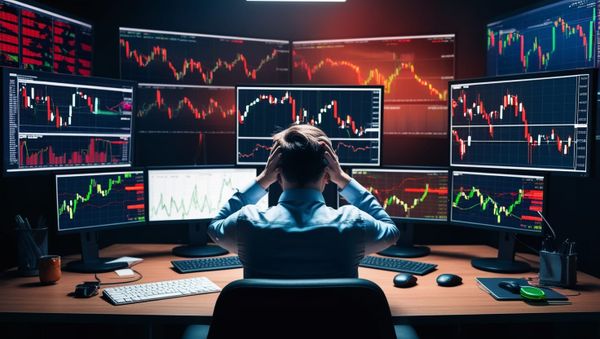
A 19-year-old trader recently posted on r/Daytrading: "I have lost 30k usd at 19 years old and I genuinely don't know what to do with myself. I am so undisciplined on the charts. I have no degree and I know I'm gonna disappoint my family."
The post hit close to home for thousands of traders. Within hours, it had 130+ comments and nearly 90 upvotes — not because it's unusual, but because it's painfully common.
The truth most trading educators won't tell you: starting young doesn't mean you'll learn faster. Without the right framework, it often means you'll lose faster.
But here's the counterintuitive part — if you're young and you've already blown up an account, you might actually be in a better position than you realize.
Let me explain.
The Young Trader Trap: Why Age Amplifies Every Mistake
The Confidence Problem
At 19 or 22, you've likely experienced some success in life — good grades, maybe a first job, perhaps some wins in other areas. That success creates a dangerous baseline confidence.
"I figured out school. I can figure out trading."
The market doesn't care about your track record elsewhere. As one commenter put it bluntly: "You should've stopped and asked at -1-2k."
The problem? Most young traders don't have a framework for recognizing when they're out of their depth. They've never failed at something this complex before.
The Money Perception Problem
$30,000 at 19 feels like a fortune — because it often is. It might represent:
- Years of saving
- Student loan money (meant for other things)
- Money from family
But here's what makes it worse: that same $30K at 35, with a career and savings, feels different. The psychological weight of the loss scales inversely with your financial resources.
Young traders feel every dollar more intensely. Which leads to the next problem...
The Emotional Amplification Problem
One commenter captured this perfectly: "The shame hits way harder than the actual loss... most people have at least one 'what was I thinking' moment with money, they just don't talk about it."
Young traders often:
- Haven't developed emotional regulation skills yet
- Tie their identity to their trading results
- Face pressure from family who don't understand trading
- Have smaller support networks of people who've been through similar experiences
That emotional weight creates a vicious cycle: you feel bad, you trade to feel better, you lose more, you feel worse.
The Real Cost Isn't the Money
Here's what experienced traders know that young traders don't: $30K at 19 is recoverable.
You have 40+ working years ahead of you. Even at minimum wage, you'd make that back in about 2 years. With a career, much faster.
The real costs are:
1. Time — Years spent chasing the wrong approach
2. Habits — Bad trading patterns that become harder to break
3. Opportunity — What else you could have done with that capital
4. Confidence — The psychological damage that affects future decisions
The money itself? It's the cheapest lesson you'll ever pay for — if you actually learn from it.
The 5 Lessons That Cost This Trader $30K
Lesson 1: Discipline Isn't a Feeling — It's a Structure
The trader admitted: "I am so undisciplined on the charts."
Here's what most people get wrong about discipline: they think it's something you summon through willpower.
It's not. Discipline is a structure. You don't wake up and decide to be disciplined. You build systems that make discipline the default.
What this looks like in practice:
- Position size limits that physically prevent oversized losses
- Daily stop losses that end your trading day automatically
- Written rules that you execute without thinking
- Pre-defined entries that remove real-time decision making
The reason most young traders are "undisciplined" isn't weakness — it's that they're trying to rely on willpower in an environment designed to exploit it.
→ The fix: Stop trying to be more disciplined. Build systems that don't require discipline. StealthScalp automates this entirely — the strategy executes one trade per day with predefined parameters, removing discipline from the equation completely.
Lesson 2: Risk Management Isn't a Suggestion — It's the Only Thing That Matters
Most trading education focuses on entries. When should I buy? When should I sell?
But the best entries in the world don't matter if you're risking 10% per trade. The math will destroy you.
The brutal math:
- 5 losses at 10% risk each = 50% drawdown
- To recover from 50% down, you need to gain 100%
- That's nearly impossible without taking more risk
- Which leads to more losses
- Spiral continues
Young traders typically don't understand this math because they've never experienced it. By the time they do, the damage is done.
The top comment on the Reddit thread said it clearly: "You're a bit late if you already lost the 30k. You're only 19 so you can make it back, but you should've stopped and asked at -1-2k."
The real lesson: The moment you're down $1-2K without understanding why, stop. Don't try to make it back. That's the signal that something is fundamentally broken in your approach.
Lesson 3: Paper Trading Isn't Pointless — But It's Not Enough Either
One of the most heated debates in the thread was about paper trading.
One side: "Paper trading does nothing for you. So paper trade for a whole year with fake money? To then let all your emotions take over when you use real money."
The other side: "Most don't backtest and most lose money. The proper way is to backtest/paper trade your edge so you know how to stick to a system."
Both are right. Here's the synthesis:
Paper trading teaches you:
- Whether your edge actually works statistically
- What setups to wait for
- Mechanical execution of a plan
Paper trading doesn't teach you:
- Emotional control with real money at risk
- How you behave when positions go against you
- The physical feeling of loss
The solution: Paper trade until you're consistently profitable for 3+ months. Then trade real money with the smallest possible position size. The goal isn't to make money — it's to expose yourself to real emotional stakes while the damage is limited.
Or, better yet: use automation to remove your emotions from the equation entirely.
Lesson 4: The "Bleed" Isn't Always Valuable
A controversial take from the thread: "Bleeding in the market is what makes you a trader... he now has real experience which is priceless."
This is half-true and half-dangerous.
When losses teach you something:
- You lost because you broke your rules (and now you know the cost)
- You lost because of a specific mistake you can identify and fix
- You lost because your strategy has a flaw you can now address
When losses teach you nothing:
- You lost because you were gambling without a plan
- You lost because you were revenge trading
- You lost because you never had a real edge to begin with
$30K in "experience" isn't worth more than $3K in experience if the lesson is the same: you were trading without a real edge.
The market doesn't charge by the lesson. It charges by the mistake. Make sure you're actually learning something new with each loss.
Lesson 5: Time Is Your Greatest Asset (If You Use It Right)
Here's the genuinely good news: being young means you have time to recover. But that time is only valuable if you use it differently.
The wrong way to use time:
- Keep trading the same way, hoping for different results
- Chase back your losses
- Avoid the problem and pretend it didn't happen
The right way to use time:
- Step back completely (minimum 1-3 months)
- Study risk management and trading psychology obsessively
- Build or find a systematic approach with a verified edge
- Return with minimum size and zero pressure to perform
One commenter said: "19 is so early too... it feels huge now but it's not the end of anything, even if it feels like it."
That's true. But only if you treat this as a lesson and not just a setback to overcome through more trading.
The Recovery Framework: What to Do Now
If you're a young trader who just lost a significant amount of money, here's the step-by-step path forward:
Step 1: Stop Trading Immediately
Not temporarily. Not "until you feel better." Stop completely for a minimum of one month.
This isn't punishment — it's pattern interruption. Your brain has learned that trading = emotional stimulus. You need to break that association before you can build a healthy one.
Step 2: Calculate Your True All-In Cost
Add up:
- Direct losses
- Time spent trading (at whatever you could have earned working)
- Mental/emotional energy expended
- Opportunity cost (what else could that money have done?)
Write this number down. This is your tuition for the most expensive education you'll ever pay for.
Step 3: Answer the Hard Question Honestly
"Do I want to trade, or do I want to have traded successfully?"
Many young traders are attracted to the identity of being a trader, not the actual work of trading. They want the story of the 19-year-old who turned $5K into $500K. They want the lifestyle. They want the freedom.
But they don't want to sit at a screen and do nothing because there's no setup. They don't want to take small, boring wins day after day. They don't want to journal their emotions and identify behavioral patterns.
If you're in it for the identity: stop now. Find another path. There's no shame in that.
If you genuinely want to develop the skill: continue to step 4.
Step 4: Build the Foundation You Skipped
- Read at least 3 books on trading psychology (Mark Douglas, Brett Steenbarger)
- Study risk management until you can calculate position sizing in your sleep
- Backtest a single strategy for at least 100 trades
- Paper trade that strategy for at least 3 months
This isn't optional. This is the foundation that most young traders skip. It's boring. It doesn't feel like progress. That's exactly why it works.
Step 5: Return with Structure, Not Hope
When you come back:
- Maximum 1% risk per trade (non-negotiable)
- Daily loss limit of 2-3% (after which you stop for the day)
- Maximum 1-3 trades per day (preferably one)
- Written rules that you follow without exception
Better yet: consider automation.
→ StealthScalp removes the entire behavioral element. It takes one trade per day, uses predefined risk parameters, and executes without emotion. For young traders who struggle with discipline, this isn't a crutch — it's a structural solution to a structural problem.
The Real Lesson Nobody Talks About
Here's what the 19-year-old trader may not realize yet: this loss might be the best thing that ever happened to him.
Not because suffering builds character. Not because you need to "pay your dues."
It's because now he knows something crucial: trading without structure will destroy him.
Some traders learn this at 19 with $30K. Others learn it at 45 with their retirement fund. Others never learn it at all and spend decades bleeding money while calling it "experience."
If you're young and you've just learned this lesson the hard way, you have a choice:
1. Keep trading the same way (and learn the same lesson again, more painfully)
2. Walk away forever (no shame in this)
3. Come back with a completely different approach
Option 3 requires you to admit that what you were doing wasn't working and probably never would have worked. That's hard at any age. It's especially hard when you're young and used to figuring things out.
But it's also the only path that leads somewhere good.
What Actually Works
After analyzing hundreds of trader stories, the pattern is clear: the traders who survive are the ones who remove themselves from the equation.
That means:
- Systematic approaches that execute without real-time decisions
- Risk management that's automatic, not chosen in the moment
- Daily limits that enforce themselves
- Strategies that work whether you "feel like it" or not
For young traders especially, automation isn't about being lazy. It's about recognizing that your greatest weakness (emotional volatility, discipline, impulsivity) can't be fixed through willpower alone.
→ StealthScalp is built around this principle. One trade per day. Predefined parameters. No real-time decisions required. The strategy either triggers or it doesn't. You don't need discipline because the system provides it for you.
The Bottom Line
Losing $30K at 19 isn't the end of the world. It's not even close.
But what you do next determines whether this becomes an expensive lesson or an expensive mistake you repeat for the rest of your life.
The choice is actually simple:
- If you want to keep trading, build structure first
- If you're not willing to build structure, stop trading
There's no middle path. The market will find your weakness and exploit it. The only question is whether you build walls around that weakness before it costs you more than you can afford.
For what it's worth: every successful trader I know has a story like this. The difference is what they did afterward.
---
Young and interested in futures trading? StealthScalp is designed for traders who want the systematic approach without building it themselves. Learn more about automated futures trading →