Why Forcing Trades Is the Biggest Mistake Keeping You Stuck (And How to Finally Stop)


Most traders don't fail because they can't read charts or understand market structure. They fail because they can't sit still.
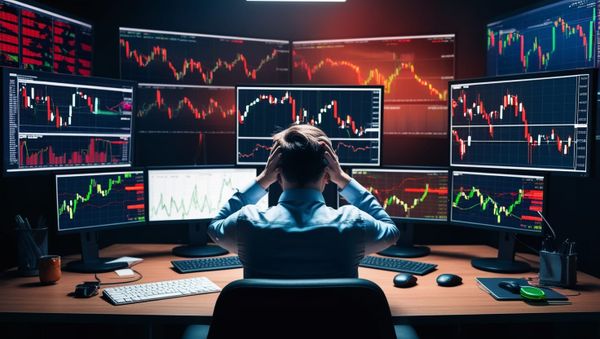
If you've ever stared at your screen for hours, convinced yourself a setup existed just because you wanted to be in a trade, and then watched it go against you immediately — you're not alone. Forcing trades is the silent killer of trading accounts, and it might be the single biggest mistake holding you back.
Let's break down why this happens and what actually works to fix it.
The Forcing Trades Trap: Why It's So Common
On a recent r/Daytrading thread that blew up with over 100 upvotes and dozens of comments, trader after trader shared the same confession: forcing trades kept them stuck for years.
The original poster put it perfectly:
"I'd sit at the screen for hours and convince myself a setup existed just because I wanted to be in a trade. Once I started becoming more selective and accepting that some days there just isn't a good opportunity, things started to change."
The comments revealed how universal this problem is. As one trader admitted: "Forcing trades and losing. When the right setup comes along, I end up breaking even or still end up with a net loss due to overtrading."
Another described the moment of clarity: "Trading just to trade. And sometimes the second you hit confirm you go back to the graph and go wait wtf am I doing?"
Sound familiar?
The High-Achiever Trap: Why "Working Harder" Backfires in Trading
Here's where it gets interesting. One veteran options trader in the thread dropped a truth bomb that explains why so many talented people struggle with this:
"Many would-be traders are high-performing, motivated people who have worked hard to succeed in prior endeavors. Musicians, corporate climbers, entrepreneurs, athletes, high GPA grads. We succeeded because we kept pushing and pushing ourselves to succeed. That same trait can cause us to push too hard in trading."
- More hours = more results
- More effort = more progress
- More action = more success
Trading flips this script entirely. The market doesn't reward effort — it rewards accuracy. Sitting at your screen for 8 hours doesn't make you 8x more profitable. It usually makes you 8x more likely to overtrade.
The trader continued: "We are sitting there, doing nothing, waiting and waiting for a setup. We think we aren't working hard enough to hit the goal. The very goal-driven focus that made us succeed in prior endeavors may push us into trying to create forward motion when we need to be still."
The One-Sentence Test That Eliminates 80% of Bad Trades
One of the most practical fixes shared in the discussion was simple but powerful:
"If I can't explain my entry in one sentence without hesitating, I don't take the trade. Sounds obvious but it eliminated like 80% of my bad entries almost immediately."
Try it right now. Before your next entry, ask yourself: "Can I explain exactly why I'm taking this trade in one clear sentence?"
Not "The chart looks bullish" or "It might go up." Something specific like: "Price swept the low, displaced bullish, and is filling the FVG I marked pre-market."
If you hesitate, stutter, or have to convince yourself — that's your answer. No trade.
The Setup Grading System That Changed Everything
Another trader shared a more systematic approach that transformed his results:
"Thing that really exploded my profits was grading my setups. A+ setups occur about 6 to 10 times a year and are 5x size my B setups. A+ setups make about 80% of my yearly profits."
Read that again. 6 to 10 setups per year — not per day, not per week — account for 80% of their annual profits.
This flips the usual trading mindset completely. Most traders think they need to be in the market constantly. The reality? Your edge only shows up occasionally. The rest of the time, you're just giving back profits.
One trader in the thread is using AI to grade his setups: "I'm using AI to grade my trades based on my library of scalp rules and a couple years worth of CSV files. It's actually helping me get a handle on overtrading by eliminating B setups or lower."
Whether you use technology or a simple checklist, the principle is the same: not all setups are created equal. Stop treating C-grade opportunities like A+ trades.
What Actually Works: 5 Strategies From Traders Who Stopped Forcing Trades
1. Reframe Waiting as the Work
The options trader who identified the high-achiever trap found his solution:
"Once I reframed waiting for a good setup as forward motion, it changed my progress. My goal now is waiting for the setup. Then execute. Waiting is the money-maker."
This is a fundamental mindset shift. Waiting isn't laziness. Waiting isn't failing to work hard enough. Waiting is the work.
2. Use a "Boredom Account"
When the urge to trade hits, one trader has a clever workaround:
"If I'm bored and I feel the need to trade, I switch to my paper trade account. Sure, it's not the same, but scratches the itch and it quickly makes you realize you would've lost $ if you had continued on your live account."
Paper trading when bored does two things: it satisfies the psychological need for action, and it creates a documented record of how those "boredom trades" would have performed. Usually, the data is sobering.
3. Create Visual Reminders
Sometimes the simplest solutions work best:
"Being visual I had a sign that said 'no setup no trade' and a reminder that choppy days are much different than trends."
Put it on your monitor. Put it on your wall. Put it as your phone wallpaper. The reminders need to be unavoidable when temptation hits.
4. Set Price Alerts and Walk Away
Several traders mentioned using price alerts to solve the "mind wandering" problem:
"What do you do while you sit there and wait? Do you have alerts set up for your trading patterns? I find my mind wandering and then I miss a setup and the day is gone."
The solution isn't to watch more intensely. It's to set specific alerts for your levels and step away. Let technology do the watching. You do the executing.
5. Recognize the Pattern
One commenter summarized the brutal truth:
"Lack of patience is the no 1 issue that kills profit. No 2 is revenge trading."
Notice how these are connected. You force a trade out of impatience. It loses. Now you're revenge trading to make it back. Another loss. The spiral continues.
Breaking the cycle means catching yourself at step one — before the forced trade even happens.
The "Trades You Don't Take" Mindset
Perhaps the best summary came from a simple quote shared in the thread:
"The trades you don't take are just as important as the ones you do."
Every trade you skip is an active decision. It's capital protection. It's edge preservation. It's discipline in action.
The profitable traders aren't the ones who find more setups. They're the ones who reject more setups — and only pull the trigger when everything aligns.
Why Automation Solves This Permanently
Here's the uncomfortable truth: knowing about the forcing trades problem doesn't automatically fix it. You can read this entire article, agree with every word, and still force a trade tomorrow when you're bored and the market is open.
That's because the problem isn't knowledge — it's execution. It's human psychology fighting against what you know is right.
This is exactly why many traders in the thread mentioned automation as the ultimate solution:
"Yes automate on controllable things with data so human emotions can't take over."
Another shared: "Just built my trading bot and it's already doing wonders based off of the strategies I have. Even nicer where I can ask questions against everything and have it challenge my thinking."
When a system executes your strategy, it doesn't get bored. It doesn't force trades. It doesn't convince itself a setup exists when it doesn't. It waits — patiently, perfectly — until the exact conditions are met.
→ Trinity Trading's StealthScalp does exactly this. It executes one trade per day based on ICT-inspired FVG logic — no emotions, no forcing, no overtrading. While you're at work or sleeping, it's doing what you already know you should do but struggle to execute consistently. Learn more about automated trading with StealthScalp →
The Bottom Line
Forcing trades is seductive because it feels like progress. But as one trader put it: "Some days there genuinely isn't a setup. Those are the days you protect your capital, not prove something."
Here's your action plan:
- Start using the one-sentence test before every entry
- Grade your setups — only take A+ opportunities with full size
- Reframe waiting as work — it's not laziness, it's discipline
- Set alerts and walk away — stop staring at screens
- Consider automation — remove yourself from the execution equation
The traders who figured this out all say the same thing: once they stopped forcing trades, everything changed.
Now it's your turn to stop creating opportunities that don't exist — and start capitalizing on the ones that do.
What's the biggest mistake that kept you stuck in your trading journey? The community discussion that inspired this article had dozens of traders sharing their experiences. The consensus was clear: forcing trades is epidemic, and stopping is what separates profitable traders from everyone else.