The Stop Hunt Trap: What Market Makers Do Before Every Real Move (And How to Avoid Being the Target)

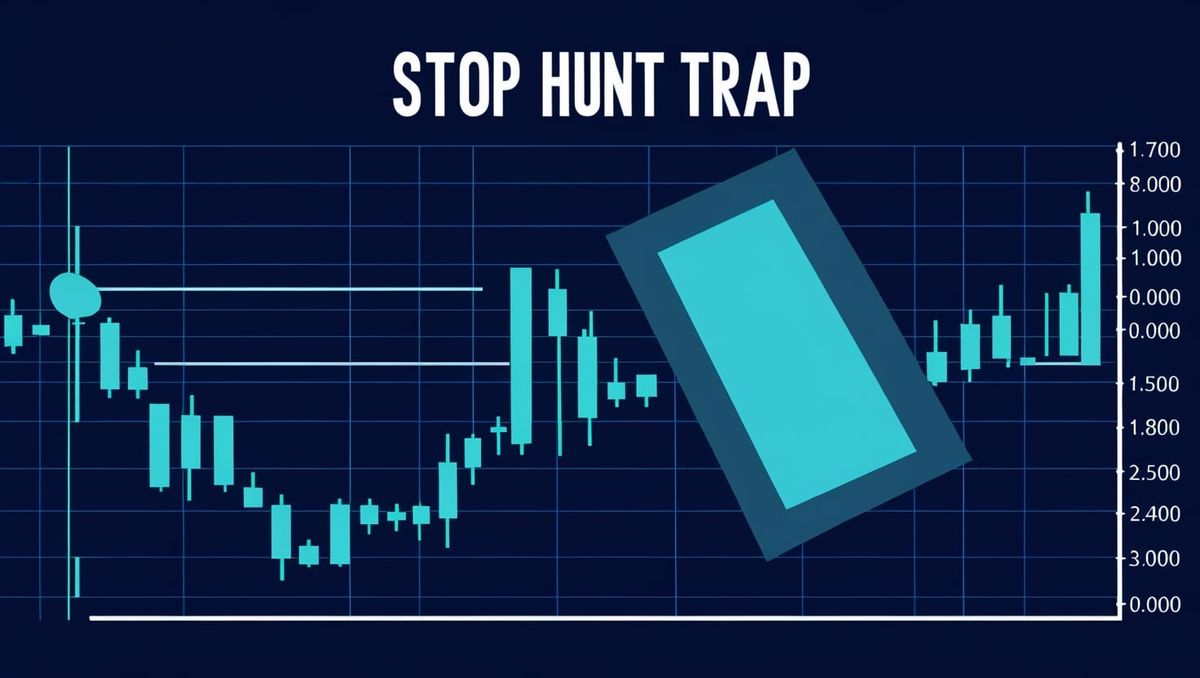
You see price moving down. Clean structure. Lower highs, lower lows. Everything looks bearish.
So you short.
And then it reverses. Stops you out. Then drops.
If this pattern feels familiar, you're not imagining it. After 16 years of watching markets, one trader recently shared what they've seen happen over and over again — and it explains why most retail traders feel like the market is personally hunting them.
Because in a way, it is.
The Pattern Nobody Tells You About
Here's what most traders think is happening when price moves down slowly:
- Sellers are in control
- Weakness is building
- More downside is coming
But here's what's actually happening, according to the 16-year veteran from r/Daytrading who broke this down:
The move isn't weakness — it's positioning.
Market makers have access to order flow data. They can see where positions are building. And they don't rush anything. They need time for:
- Positions to build
- Traders to get comfortable
- Size to accumulate in the wrong place
As one commenter put it: "Congrats, you've discovered that the only thing the market cares about is your stops."
Why Slow Moves Are Dangerous Moves
When a move happens slowly and cleanly, it feels safe. That's exactly the point.
Think about what happens during these slow, grinding moves:
- Structure looks clean — Lower highs, lower lows. Textbook bearish.
- Everyone uses the same levels — There's usually one obvious reference point above. Not a few traders use it — most of them do.
- Stops cluster in the same place — When everyone sees the same level, everyone puts their stop in the same spot.
- Market makers see this — They have access to this information.
The 16-year veteran describes this as a "controlled move." It's not selling pressure. It's the market creating conditions it needs before doing anything meaningful.
And until that positioning is done, price can't really move.
The Stop Hunt: When the Trap Springs
Once enough traders are positioned, the playbook becomes predictable:
- Price reverses — It doesn't continue down immediately. First, it goes the other way.
- Stops get taken — All those traders who shorted with stops above? Gone.
- Shorts get forced out — This creates buying pressure as shorts cover.
- Only then does the real move begin — The move you expected finally happens — after you're no longer in it.
This is why so many traders report being "stopped out right before the move." It's not bad luck. It's the pattern working exactly as designed.
What 16 Years of Pattern Recognition Revealed
The veteran trader in the Reddit discussion shared something interesting — after years of watching these sequences play out, certain proportions kept appearing. One they mentioned specifically: 1.097.
It's not a magic number. It's not exact. But it represents the approximate area where the stop hunt tends to complete before the real move begins.
More importantly, this pattern repeats across every timeframe:
- Seconds
- Minutes
- Hours
- Higher timeframes
Same idea. Different scale.
And the end of the move often aligns with where pressure sits from a higher timeframe — not randomly, but specifically where people are already in a bad position.
The Two Types of Traders
Once you understand this pattern, you realize there are really only two types of traders:
1. Traders who provide liquidity — They short where it "looks safe," put their stops where everyone else does, and get stopped out right before the move.
2. Traders who consume liquidity — They wait for the stop hunt to complete, enter after the trap springs, and ride the real move.
Most retail traders are the first type. Not because they're dumb — because they're doing exactly what the chart "tells them" to do.
As one commenter bluntly stated: "It doesn't matter which strategy you use — MACD, EMA, liquidity, orderflow, support/resistance. The most important point is: people don't actually execute and apply the strategy. They overtrade, randomly enter, and blow accounts by not following the rules."
How to Stop Being the Target
Understanding the pattern is step one. Here's how to actually apply it:
1. Question "Clean" Structure
When a move looks textbook perfect, ask yourself: who else sees this? If the answer is "everyone," you're probably looking at a setup for a stop hunt, not a continuation.
2. Identify Where Stops Cluster
Look for the obvious level. The one swing high or swing low that every trader in your timeframe is using. That level isn't support or resistance — it's a target.
3. Wait for the Hunt
Instead of entering during the "positioning phase" (the slow, clean move), wait for price to:
- Break the obvious level
- Take the stops
- Show reversal signs
Only then consider your entry.
4. Think in Terms of Positioning, Not Direction
Stop asking "which way is price going?" Start asking:
- Who is in?
- Where are they likely wrong?
- What needs to happen before price can actually move?
As the 16-year veteran put it: "Once you start looking at the market this way, it becomes less about predicting direction and more about understanding positioning."
Why Automation Removes You From the Trap
Here's the uncomfortable truth about stop hunts: they work because humans are predictable.
We see clean structure, we enter. We put stops where everyone else does. We get emotional when stopped out and revenge trade. We do exactly what the pattern needs us to do.
This is why automated trading systems have an inherent advantage.
A properly designed trading bot:
- Enters based on rules, not feelings — It doesn't see "clean bearish structure" and feel compelled to short immediately.
- Places stops based on volatility, not obvious levels — ATR-based stops don't cluster where everyone else's do.
- Doesn't revenge trade — When stopped out, it waits for the next valid setup instead of immediately re-entering.
- Can't be fooled by controlled moves — It follows its parameters regardless of how "textbook" the chart looks.
The stop hunt pattern works because retail traders are emotionally involved in their positions. Remove the emotion, remove the vulnerability.
The Deeper Lesson
The 16-year veteran's insight isn't really about a magic number or a specific pattern. It's about a fundamental shift in thinking.
Most traders approach the market as: "Where is price going and how do I catch the move?"
Better traders ask: "What conditions need to exist before price can move, and am I positioned to benefit when those conditions are met?"
The first approach makes you liquidity. The second approach lets you consume it.
Quick Reference: Stop Hunt Checklist
Before entering any trade, run through this:
- ☐ Is the move slow and controlled? (Positioning phase warning)
- ☐ Does everyone see the same obvious level? (Stop cluster target)
- ☐ Has that level been taken yet? (Hunt not complete)
- ☐ Is there a clear reason price "can't" go further? (Trap setup)
If you're entering before the hunt completes, you're probably providing liquidity, not consuming it.
The Bottom Line
After 16 years in the market, some patterns become impossible to unsee. The stop hunt trap is one of them.
Price moves slowly to let positions build. It breaks the obvious level to take stops. It reverses hard as shorts cover. Then — and only then — does the real move happen.
Most traders spend their careers being the target. The ones who survive figure out how to stop being predictable.
Whether that means changing how you read charts, where you place stops, or removing yourself from the decision-making process entirely — the first step is the same: understand that the market isn't random. It's a machine designed to take liquidity from predictable participants.
Don't be predictable.
Want to remove yourself from the trap entirely? StealthScalp automates futures trading with one disciplined trade per day — no emotional entries, no clustered stops, no revenge trading. It takes the human out of the equation, which means the trap has nothing to work with.