More Screen Time = Faster Profitability? Why This Viral Trading Advice Misses the Point
The "More Hours = More Experience" Argument
A post went viral on r/Daytrading this week with a bold claim: spending more hours staring at charts will make you consistently profitable sooner. The argument? A trader who watches 8 hours a day accumulates 4 years of experience in the time a 2-hour-a-day trader accumulates just one.
The viral post made a compelling case:
"For the trader who only stays for the first 2 hours, they accumulate ~500 hours in a year. The trader who stays for the whole 8 hours accumulates 2000 hours in that same year. That is 4 years of experience compressed into one."
The author referenced the famous "10,000 hour rule" and cited Lance Breitstein's claim that an exceptional new trader, with mentorship, can see results in about 2 years.
The conclusion: if you walk away from the screens early, you're "choosing to stay a novice for four times longer than necessary."
It's motivational. It's intense. And it contains a kernel of truth — time in the market does matter.
But as one Reddit commenter pointed out:
"I can watch professional athletes every day, but if I don't train and play like them, I'll still suck."
And that's where the argument starts to break down.
What the Research Actually Says About Skill Acquisition
Here's what the "more screen time" argument misses: it's not hours watched — it's hours of deliberate practice that build expertise.
Psychologist Anders Ericsson (the actual researcher behind the 10,000 hour concept, which Malcolm Gladwell later popularized) was clear: simply accumulating hours isn't enough. What matters is how you spend those hours.
Deliberate practice means:
- Focused attention on specific skills
- Immediate feedback on what's working and what isn't
- Systematic effort to improve weaknesses
- Mental engagement, not passive observation
Sitting in front of charts for 8 hours while scrolling Twitter, taking random trades, and not tracking results isn't deliberate practice. It's just time spent.
A trader who spends 2 focused hours:
- Analyzing specific setups
- Journaling every trade
- Reviewing what went wrong
- Backtesting hypotheses
...will likely improve faster than someone spending 8 hours watching candles while distracted.
The Burnout Problem Nobody Mentions
Another commenter in the viral thread put it bluntly:
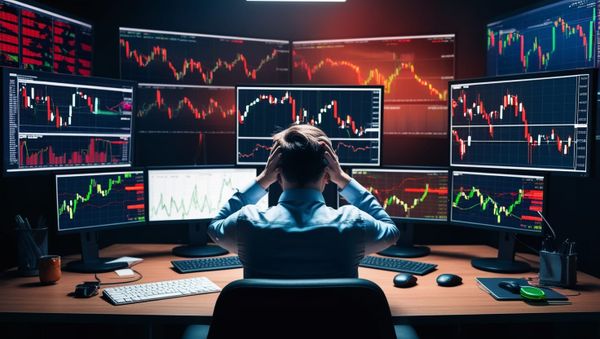
"Even if you know what you're doing, you can sit in front of the screen for hours and blow your account."
Here's the uncomfortable truth about long screen time: fatigue destroys decision-making.
Studies on decision fatigue show that the quality of our choices deteriorates throughout the day. After hours of concentrated focus, traders are more likely to:
- Take revenge trades
- Ignore their trading plan
- Size up after losses
- Chase entries they would normally skip
The advice to "protect your mental capital by walking away" isn't weakness — it's strategy. Professional prop traders often have strict daily limits not because they're lazy, but because they know that a tired mind makes expensive mistakes.
The Quality vs. Quantity Debate
So which is it? Should you spend more time at the charts or less?
The answer is nuanced: quality hours beat quantity hours, but you still need enough volume to learn.
Here's what actually accelerates the trading learning curve:
1. Focused Session Trading
Trade specific sessions (like the New York open) with full attention. Track every trade. Review daily. This concentrated approach builds pattern recognition faster than unfocused all-day watching.
2. Backtesting as "Compressed Time"
Want to see thousands of trading scenarios without sitting through years of live market? Backtesting lets you review historical data rapidly. One afternoon of backtesting can expose you to more setups than weeks of live observation.
3. Journaling and Review
Every experienced trader mentions journaling. Why? Because reviewing your trades with fresh eyes reveals patterns you miss in the moment. Two hours of trading plus one hour of review often beats five hours of unexamined trading.
4. Simulation and Replay
Market replay tools let you practice trading historical sessions at your own pace. You can "experience" a year of market sessions in a fraction of the time — with the ability to pause, analyze, and learn.
The Case for Automation (The Real Time Compression)
Here's what the viral post almost touched on but didn't quite articulate:
"The difference between you and a machine is time; they can compress it."
This is actually profound — and it points to why automation is the ultimate screen time hack.
When you automate a trading strategy:
- It executes 24/7 — no fatigue, no distraction, no "I was grabbing lunch and missed the setup"
- It never revenge trades — the rules are the rules
- It accumulates data exponentially faster — thousands of trades instead of dozens
- It removes the human bottleneck — your system doesn't need you watching
Think about it: the original poster's argument was that 8 hours beats 2 hours because you compress more experience into less calendar time.
But what if your strategy executed automatically? What if every valid setup was taken perfectly, whether you were asleep, working, or on vacation?
That's not 4x compression — that's orders of magnitude more efficient.
The Real Reason 90% Don't Make It
The viral post claimed: "The REAL reason why 90% don't make it is because people don't have the opportunity, specifically TIME."
Respectfully, that's only part of the story.
The real reasons most traders fail:
- They don't have an edge — no amount of screen time saves a broken strategy
- They can't execute consistently — emotions override the plan
- They overtrade — more hours often means more bad trades
- They don't manage risk — one blow-up erases months of gains
- They optimize for activity — not results
More screen time doesn't fix any of these. In fact, it can make several of them worse.
What does help is developing a systematic approach, testing it thoroughly, and executing it consistently. Whether you do that manually in focused 2-hour sessions or through automation — the result is what matters.
What the Pros Actually Do
Talk to consistently profitable traders and you'll notice a pattern: most of them trade less than you'd think.
They're not glued to screens for 8 hours. They:
- Wait for specific setups in specific sessions
- Take their trade(s) and walk away
- Spend more time on preparation and review than execution
- Use rules and automation to reduce decision-making in real-time
One trader put it well: "My job isn't to sit at the computer — my job is to execute my edge. Some days that takes 20 minutes. Some days I don't trade at all."
How to Actually Accelerate Your Learning Curve
If your goal is consistent profitability in the shortest time possible, here's what the evidence suggests:
Define What You're Practicing
"Watching charts" isn't a skill. Define specific things to practice: reading order flow, identifying FVGs, managing trades at target levels. Focused practice on defined skills beats vague observation.
Get Quality Reps
One hundred quality trade reviews beat one thousand mindless candle-watches. Prioritize trades where you can analyze entry, management, and exit — then ask what you'd do differently.
Use Technology to Multiply Your Exposure
Backtesting, replay, and automation let you experience more market scenarios than raw screen time ever could. Use them.
Protect Your Peak Hours
Your best decisions happen when you're fresh. Trade your primary session with full focus, then step away. Forcing more hours when you're depleted adds noise, not signal.
Measure What Matters
Track metrics: win rate, R-multiple, profit factor, max drawdown. Screen time isn't a metric. Results are.
The Bottom Line
The viral Reddit post touched on something real: experience matters, and you can't skip the learning curve entirely.
But the formula isn't "more hours = faster success." It's "better hours + systematic approach = faster success."
If anything, the obsession with raw screen time is a symptom of the same psychological trap that causes overtrading: the belief that more activity means more progress.
It doesn't.
The traders who get profitable fastest are the ones who work smarter — with focused sessions, systematic review, and increasingly, automation that removes the human bottleneck entirely.
The question isn't "how many hours can you spend watching charts?"
The question is: "how can you extract the maximum learning from every hour you do spend?"
Answer that, and 2 hours beats 8 hours every time.
Ready to Trade Smarter, Not Longer?
→ StealthScalp executes one high-probability trade per day on NinjaTrader 8 — automatically. No screen fatigue, no emotional override, no missed setups while you're away. It's the screen time hack that actually works.
Stop watching charts. Start executing your edge.