The Hidden Cost of Trading: Why the Mental Toll Destroys More Traders Than the Market
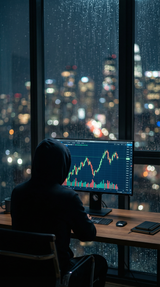
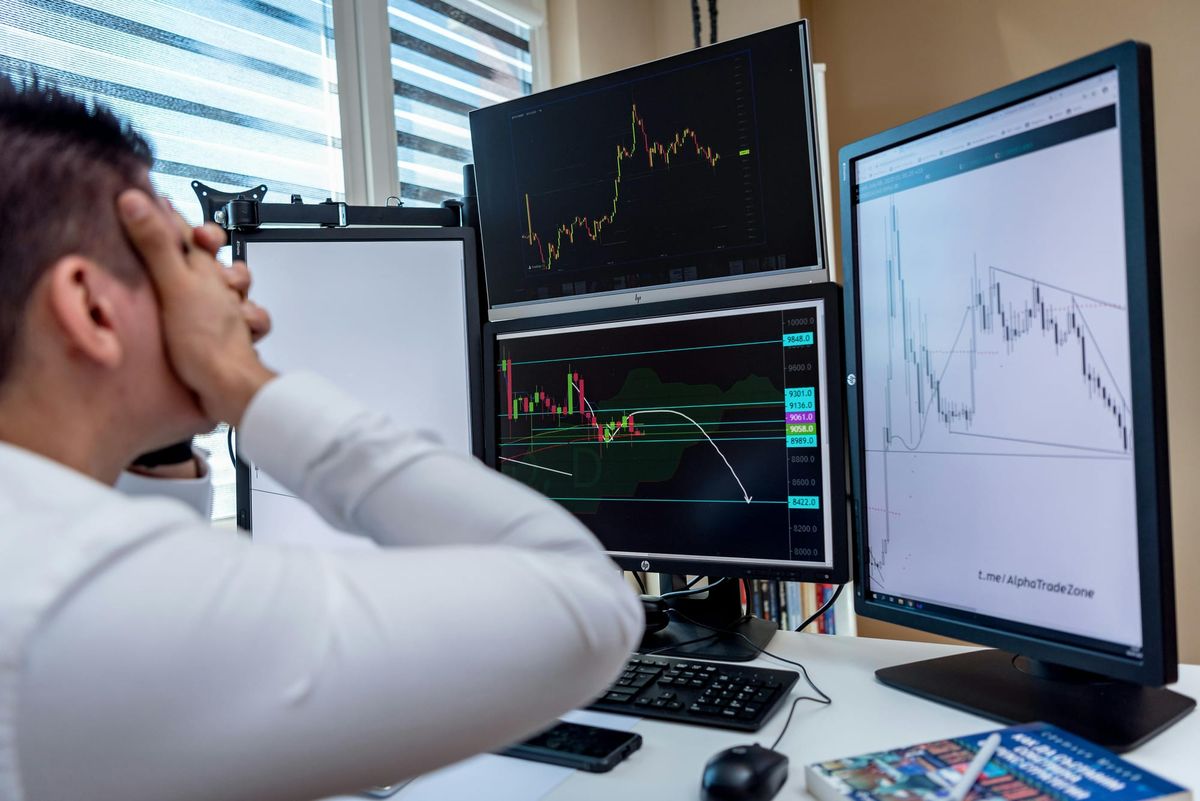
Nobody Talks About This Until It's Too Late
Every trading course teaches you how to read charts. How to spot patterns. How to calculate risk-reward ratios.
Almost none of them ask a simple question: Can you afford the mental toll?
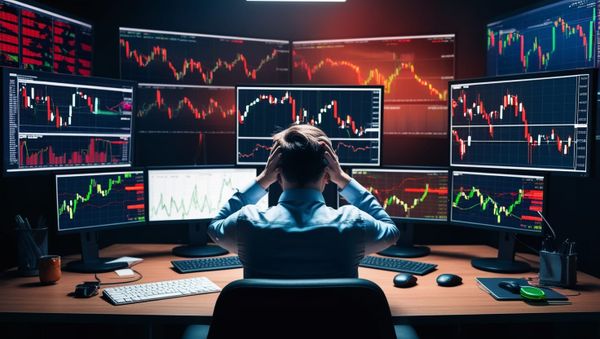
Not the financial toll — the psychological one. The one that follows you home. The one that keeps you checking charts at 2am. The one that makes a bad trade hijack your entire mood and spill into your relationships.
As one trader put it on r/Daytrading recently: "I've seen sharp, intelligent people absolutely unravel because they tied their self-worth to their P&L. And the trading education industry doesn't talk about this because it doesn't sell courses."
Let's talk about it.
The Cortisol Problem: Your Body Is Keeping Score
When you watch a trade go against you, your body doesn't know the difference between a red candle and a charging lion. It responds the same way: adrenaline surge, cortisol release, fight-or-flight activation.
Research from the University of Cambridge tracked traders in the City of London and found something alarming: during periods of increased market volatility, traders experienced a 68% increase in their mean daily cortisol levels over just 8 days.
That's not a minor stress response. That's chronic activation of your body's emergency system.
And here's where it gets worse: elevated cortisol doesn't just make you feel stressed — it changes how you trade. A study published in PNAS found that men with higher cortisol levels were significantly more likely to take irrational risks, contributing to market instability.
So the stress doesn't just hurt you — it makes you trade worse. Which creates more stress. Which makes you trade even worse.
This is the cycle that destroys accounts. Not strategy. Biochemistry.
The 3 A.M. Chart-Check: When Trading Becomes Obsession
You know the feeling. You wake up in the middle of the night and grab your phone. Just a quick glance at the futures. Just to see where things are headed.
Three hours later, you're still staring at candlesticks, sleep-deprived, anxious, and mentally running scenarios for a trade that won't even be relevant by market open.
This isn't discipline. This is compulsion.
Trading has a unique psychological trap: the market is always open somewhere. Futures trade nearly 24 hours. Crypto never stops. There's always something moving, always something to watch, always a reason to "just check."
But constant monitoring doesn't improve results. Research on traders who maintain healthy lifestyle habits — including proper sleep — shows they experience 57% lower cortisol levels during market volatility compared to those who don't.
The traders who perform best aren't watching charts constantly. They're the ones who can close the laptop.
The Identity Crisis Nobody Warns You About
Here's the most dangerous trap in trading: making your P&L your identity.
Green day? You're a genius. Red day? You're worthless.
This isn't sustainable. This is a recipe for psychological collapse.
When your self-worth rises and falls with your account balance, every losing trade becomes an attack on who you are. Every winning trade inflates an ego that will inevitably be deflated. And when a strategy that's been working suddenly stops working — which happens to every strategy eventually — you don't just lose money. You lose yourself.
The traders who survive long-term have figured out how to separate identity from outcomes. They treat trading like a business: defined rules, tracked performance, and zero emotional attachment to individual trades.
They let the data tell the story, not their feelings.
The Relationship Tax: What Red Days Cost You Outside the Charts
Trading stress doesn't stay at your desk. It follows you to dinner. It's there when your kids want to play. It shows up in conversations where you're physically present but mentally replaying the trade you should have exited earlier.
A study on anxiety and stress among day traders found that trading stress interferes with adapting to everyday tasks, including social relationships.
Ask any trader's spouse. They'll tell you: they always know whether it was a green day or a red day. Not because the trader tells them — because they can see it. In the mood. In the distraction. In the irritability.
If you can't trade without it poisoning your relationships, you can't afford to trade. Full stop.
How the Survivors Actually Manage It
So what works? What do the traders who last 5, 10, 20 years actually do differently?
1. They Build Systems That Don't Require Constant Attention
The obsessive chart-watching isn't just stressful — it's counterproductive. The best traders have systems: defined entries, defined exits, defined risk. Once the trade is on, there's nothing to watch. The rules handle it.
This is why automation isn't just convenient — it's protective. When the system executes the trade, you're not sitting there second-guessing, micromanaging, or letting cortisol make decisions for you.
2. They Track Data, Not Feelings
Professional traders don't ask "how did that trade feel?" They ask "did that trade follow the plan?"
A losing trade that followed the rules is a success. A winning trade that broke the rules is a failure waiting to compound.
The data tells you what's working. Your feelings lie.
3. They Set Hard Boundaries
No trading after a certain hour. No checking charts on weekends. No more than X trades per day. No trading when emotional.
These aren't restrictions — they're protection. The traders who set boundaries keep trading. The traders who don't burn out.
4. They Diversify Their Identity
The most psychologically resilient traders have lives outside trading. Hobbies. Relationships. Goals that have nothing to do with markets.
When trading is everything, a drawdown is devastating. When trading is one part of a full life, a drawdown is just data.
5. They Remove Themselves From the Equation
This is the ultimate solution that most traders resist until they've suffered enough: take the human element out of trade execution.
Not out of strategy development. Not out of analysis. Out of execution.
When a machine executes your trades, cortisol doesn't matter. When the system runs while you sleep, there's nothing to check at 3am. When you're not sitting there watching every tick, the psychological cost drops to near zero.
This is why automation isn't giving up — it's growing up. It's acknowledging that you have a nervous system that wasn't designed for this environment, and building a system that doesn't require you to fight it constantly.
The Question You Should Actually Be Asking
Before you fund another account, before you take another course, before you tweak another strategy — ask yourself:
Can I afford the mental toll of trading the way I'm trading?
If the answer is no, you have two options:
- Change how you trade (fewer trades, stricter rules, hard boundaries)
- Change who executes the trades (hint: it doesn't have to be you)
The market doesn't care about your cortisol levels. It doesn't care about your relationships or your sleep or your sense of self-worth. It will take everything you give it.
The question is whether you're going to keep giving it your mental health, or whether you're going to build a system that protects you from yourself.
The Automation Advantage: Trading Without the Toll
At Trinity Trading, we built StealthScalp specifically for traders who understand this problem.
One trade per day. Predefined risk. Automatic execution. No chart-watching required.
The strategy runs whether you're awake or asleep. Whether you're stressed or calm. Whether you had a good day or a bad one.
→ Learn how StealthScalp eliminates the psychological cost of trading
Your nervous system wasn't designed for the markets. Your strategy doesn't have to be limited by that fact.
Final Thought
The trading education industry sells you strategies because strategies are easy to package and sell.
What they don't sell is this: the psychological cost of trading is way underestimated. And it destroys more traders than bad strategies ever will.
The traders who last aren't necessarily smarter. They're not necessarily better at reading charts. They're the ones who figured out how to trade without letting it consume them.
Figure that out, and everything else gets easier.