10 Futures Trading Strategies That Actually Work in 2026

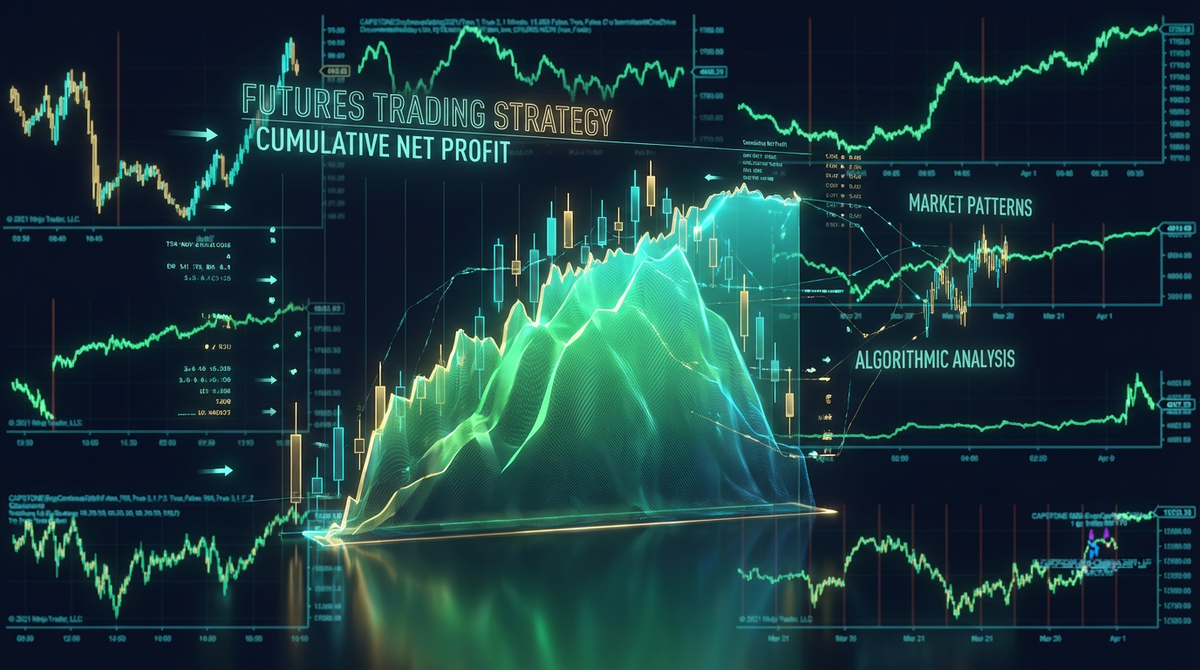
Futures trading offers massive opportunities — but without a clear strategy, it's easy to get caught in emotional trades, overleveraged positions, or missed setups. Whether you're just getting started or looking to sharpen your edge, understanding the most effective futures trading strategies is essential.
In this guide, we'll break down the top futures trading strategies used by successful traders in 2026 — from fast-paced scalping to patient swing trading and everything in between. You'll learn when to use each strategy, which indicators matter most, and how automation is changing the game.
What Is a Futures Trading Strategy?
A futures trading strategy is a structured approach to entering and exiting trades in the futures market. It defines when you trade, what you trade, how you manage risk, and when you take profits. Without one, you're gambling — not trading.
The best strategies share common traits:
- Clear entry and exit rules — no guessing
- Defined risk parameters — stop-losses and position sizing
- Backtested edge — proven performance over historical data
- Repeatable process — can be executed consistently, day after day
Let's dive into the strategies that are working right now.
1. Scalping: Quick Profits from Small Moves
Scalping is the fastest futures trading strategy, targeting small price movements over very short timeframes — typically seconds to minutes. Scalpers execute 10 to 50+ trades per day, capturing tiny gains that compound over time.
How Scalping Works
Scalpers use 1-minute or tick charts to identify micro-trends and order flow imbalances. They enter and exit positions rapidly, often holding for less than a minute. The key is high liquidity and tight spreads — which is why scalpers focus on contracts like the E-mini S&P 500 (ES), Micro Nasdaq (MNQ), and Crude Oil (CL).
Key Indicators for Scalping
- Order Flow / DOM (Depth of Market) — real-time supply and demand visualization
- VWAP — identifies fair value for intraday mean reversion
- 9 EMA / 21 EMA crossovers — quick momentum signals
- Cumulative Delta — measures buying vs. selling pressure
Pros and Cons
- ✅ Many opportunities per day
- ✅ Low overnight risk (all positions closed intraday)
- ❌ Requires intense focus and fast execution
- ❌ Commissions and slippage can eat into profits
Pro Tip: Scalping is one of the hardest strategies to execute manually. Many successful scalpers use automated trading systems to remove emotion and ensure lightning-fast execution. → Explore StealthScalp, a fully automated NinjaTrader strategy designed for one high-probability trade per day.
2. Day Trading: Intraday Moves Without Overnight Risk
Day trading is arguably the most popular futures trading strategy. All positions are opened and closed within the same trading session — no overnight holds, no gap risk.
How Day Trading Works
Day traders typically use 5-minute to 15-minute charts and focus on the most volatile market hours (the first and last hour of the session). They combine technical analysis with price action to identify high-probability setups.
Popular Day Trading Setups
- Opening Range Breakout (ORB) — trade the breakout of the first 15-30 minutes
- VWAP Bounce — enter long/short on a pullback to VWAP
- Moving Average Crossover — 9 EMA crossing above/below 21 EMA
- Support/Resistance Rejections — trade bounces off key levels
Best Contracts for Day Trading
- E-mini S&P 500 (ES) — the gold standard for liquidity
- Micro E-mini Nasdaq (MNQ) — great for smaller accounts
- Crude Oil (CL) — volatile with strong intraday moves
- 10-Year Treasury Notes (ZN) — popular for news-driven traders
Day trading demands discipline and screen time. Most failed day trades come from a lack of planning, not a bad strategy. Always define your entry, stop-loss, and target before placing a trade.
3. Swing Trading: Capturing Multi-Day Moves
Swing trading is a medium-term strategy where traders hold positions for several days to a few weeks. Instead of reacting to every tick, swing traders look for broader "swings" in price driven by momentum, patterns, or fundamentals.
Why Traders Love Swing Trading
- Less screen time — analyze charts at night, execute during the day
- Bigger moves — swing trades often offer 3:1 or better reward-to-risk ratios
- Fewer trades — quality over quantity reduces overtrading
Key Swing Trading Indicators
- RSI (Relative Strength Index) — identifies overbought/oversold conditions
- MACD — confirms trend direction and momentum shifts
- Bollinger Bands — highlights volatility expansion and mean reversion setups
- Fibonacci Retracements — maps potential support and resistance zones
Swing trading is ideal for part-time traders or anyone with a day job. It balances profit potential with time commitment — you don't need to stare at screens all day.
4. Trend Following: Ride the Momentum
Trend following is one of the oldest and most proven futures strategies. The concept is simple: trade in the direction of the dominant market trend. Buy when the market is going up, sell when it's going down. Don't try to predict reversals.
How to Identify Trends
- Higher highs and higher lows = uptrend
- Lower highs and lower lows = downtrend
- 50/200 SMA crossover (Golden Cross / Death Cross)
- ADX (Average Directional Index) — measures trend strength (above 25 = strong trend)
The Evidence Behind Trend Following
Academic research consistently validates trend following. A 2025 study analyzing China's futures markets from 1999–2019 found that a multi-scale trend following strategy achieved a 16.24% annualized return with a Sharpe ratio of 0.88, significantly outperforming buy-and-hold approaches. Trend following works because markets are driven by human psychology — fear and greed create momentum.
The biggest challenge? Drawdowns. Trend followers can experience extended losing streaks during choppy, range-bound markets. The key is proper position sizing and the discipline to stick with the system.
5. Mean Reversion: Trading the Snapback
Mean reversion is the opposite of trend following. It's based on the idea that prices tend to return to their average over time. When a futures contract moves too far from its mean, mean reversion traders bet on a snapback.
How Mean Reversion Works
- Price stretches above the upper Bollinger Band → short for reversion to the mean
- RSI drops below 30 (oversold) → buy expecting a bounce
- Price deviates significantly from VWAP → trade back toward VWAP
Best Markets for Mean Reversion
Mean reversion works best in range-bound, choppy markets — the exact environment where trend following struggles. Index futures (ES, NQ) tend to mean-revert during low-volatility periods, making this strategy a great complement to trend following.
Warning: Mean reversion can be dangerous during strong trends or news shocks. Always use stop-losses — a "stretched" price can keep stretching.
6. Breakout Trading: Catch the Big Moves Early
Breakout trading targets moments when price breaks through established support or resistance levels with increased volume. These breakouts often signal the start of a new trend or a significant price move.
Breakout Setup Components
- Consolidation zone — price compresses into a tight range
- Volume surge — confirms the breakout is legitimate
- Retest — old resistance becomes new support (or vice versa)
Avoiding False Breakouts
The biggest risk with breakout trading is the false breakout — price breaks a level, triggers entries, then reverses. To filter out fakes:
- Wait for a candle close beyond the level (not just a wick)
- Confirm with volume — real breakouts come with conviction
- Use the retest entry — wait for price to pull back to the breakout level before entering
7. Spread Trading: Lower Risk, Defined Exposure
Spread trading involves simultaneously buying and selling two related futures contracts. Instead of betting on the direction of a single market, you're betting on the price difference (spread) between two contracts.
Types of Futures Spreads
- Calendar Spreads — buy one contract month, sell another (e.g., long March ES, short June ES)
- Inter-Market Spreads — trade the relationship between related markets (e.g., crude oil vs. natural gas)
- Intra-Market Spreads — trade different grades or delivery points within the same commodity
Why Traders Use Spreads
- Lower margin requirements — exchanges often offer reduced margins for spreads
- Reduced volatility — the spread often moves less than the outright contracts
- Defined risk — your exposure is limited to the spread movement
Spread trading is popular among experienced traders and institutional desks who understand the fundamental relationships between markets.
8. News-Based Trading: Capitalize on Market Events
News-based trading focuses on high-impact economic events — NFP (Non-Farm Payrolls), CPI, FOMC announcements, and earnings reports. These events create sharp, fast price moves that skilled traders can exploit.
How News Trading Works
- Pre-position — take a directional bet before the event based on analysis
- Straddle — place orders on both sides to catch the move regardless of direction
- Fade the spike — wait for the initial overreaction, then trade the reversal
Risks of News Trading
- Extreme volatility — slippage can be significant
- Whipsaws — price may reverse multiple times in seconds
- Wider spreads — liquidity can dry up momentarily around announcements
If you trade with a prop firm, check their rules — some firms restrict or ban trading during high-impact news events. Others, like Apex Trader Funding and TopStep, now allow it.
9. Automated Trading: Let Algorithms Do the Work
Automated trading (algo trading) uses pre-programmed rules to execute trades without manual intervention. The algorithm monitors the market, identifies setups that match your criteria, and places orders automatically — no emotions, no hesitation, no missed entries.
Why Automation Is Growing
- Eliminates emotion — the #1 killer of manual traders
- 24/5 execution — never miss a setup, even while sleeping
- Backtestable — validate strategies against historical data before risking real money
- Consistent — executes the same way every time, regardless of market conditions
Getting Started with Automated Futures Trading
The most popular platform for automated futures trading is NinjaTrader 8, which supports custom C# strategies and has a massive community of developers. Traders can build their own algorithms, purchase third-party strategies, or use platforms that provide ready-to-deploy automation.
→ StealthScalp by Trinity Trading is a fully automated NinjaTrader strategy that takes one high-probability trade per day on futures. It's designed for prop firm traders who want consistent, hands-off execution without the emotional rollercoaster of manual trading. Learn more →
Running Automation on a VPS
For automated strategies to work reliably, they need to be running 24/5 on a stable connection. Most serious algo traders use a VPS (Virtual Private Server) located near the CME exchange in Chicago for ultra-low latency execution. This ensures your strategy executes at the right price, every time.
10. Seasonal Trading: Patterns That Repeat Every Year
Seasonal trading exploits recurring price patterns tied to specific times of the year. Agricultural futures (corn, soybeans, wheat) are the classic example — planting and harvest seasons create predictable supply-driven price swings.
Examples of Seasonal Patterns
- Natural Gas — tends to rally in fall as winter heating demand approaches
- Crude Oil — often strengthens in spring as summer driving season nears
- Corn and Soybeans — prices typically rise during planting uncertainty (April–June)
- Stock Index Futures — the "Santa Claus Rally" in late December
Seasonal patterns aren't guarantees — but they add a statistical edge when combined with technical analysis.
How to Choose the Right Futures Trading Strategy
There's no single "best" strategy. The right one depends on your personality, schedule, risk tolerance, and goals. Ask yourself:
- How much time can you dedicate? → Scalping/day trading requires full-time attention. Swing trading and automation don't.
- What's your risk tolerance? → Spread trading and mean reversion are lower risk. News trading and breakouts carry more volatility.
- Do you want to be hands-on or hands-off? → Manual strategies need discipline and screen time. Automated strategies handle execution for you.
- Are you trading with a prop firm? → Many prop firms favor consistent, low-drawdown strategies — exactly what automation delivers.
Risk Management: The Strategy Behind Every Strategy
No matter which strategy you choose, risk management is what keeps you in the game. Even the best strategy will blow up an account without proper controls.
Risk Management Essentials
- Risk 1-2% per trade maximum — survive losing streaks
- Always use stop-losses — define your worst case before entering
- Position sizing matters — adjust size based on volatility and account balance
- Track your trades — journal every entry, exit, and lesson learned
- Respect your daily loss limit — especially on prop firm accounts
The best traders aren't the ones who win the most — they're the ones who lose the least when they're wrong.
Start Trading Smarter Today
Futures trading strategies aren't just for hedge fund managers. With the right approach, proper risk management, and a commitment to consistency, anyone can trade futures profitably.
If you're tired of emotional trading and inconsistent results, consider letting automation handle the hard part. StealthScalp by Trinity Trading is a fully automated NinjaTrader strategy that takes one high-probability trade per day — designed specifically for prop firm traders who want consistent, disciplined execution.