5 Lessons That Took Me 5 Years to Learn (And Why Most Traders Learn Them Too Late)

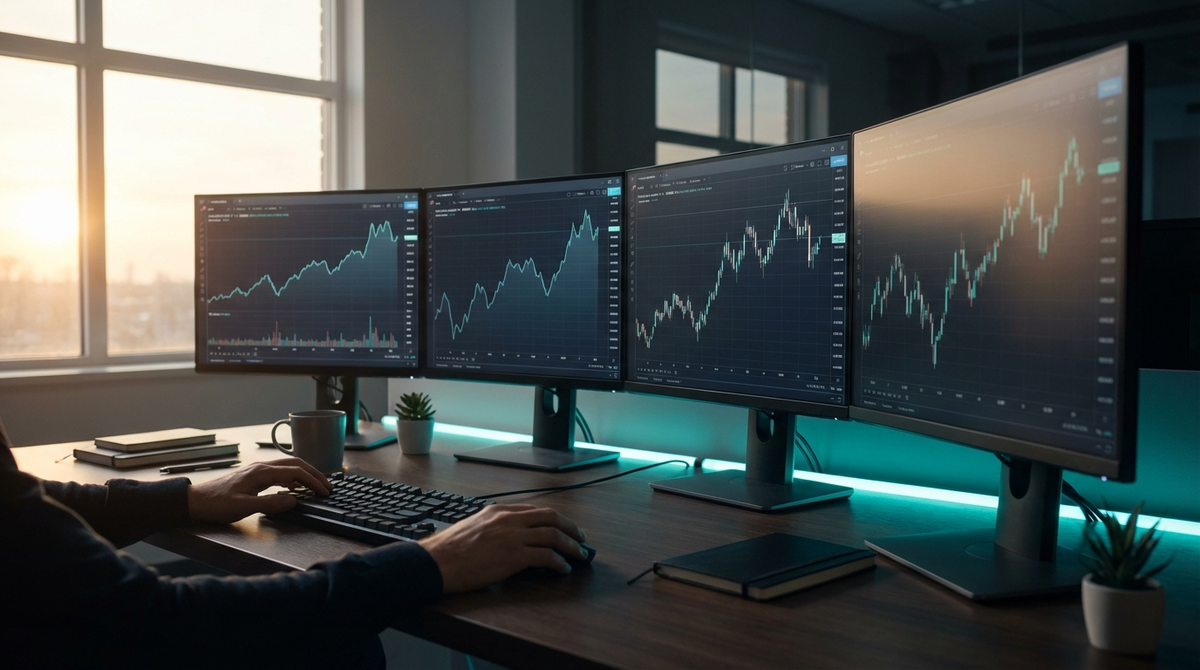
A viral Reddit post from a 5-year trading veteran just dropped some truth bombs that the trading community can't stop talking about. With nearly 1,000 upvotes and countless comments, it's clear these lessons resonate—and for good reason.
Most traders spend years and thousands of dollars learning what this post summarizes in five brutal points. Here's what every futures trader needs to understand, expanded with community insights and practical solutions.
The Reddit Post That Started It All
On r/Daytrading, a trader who's been at it for 5 years (profitable for 4) shared what he called "things that only really clicked after a few years of doing this seriously."
The post struck a nerve because it said out loud what most traders eventually figure out the hard way: success isn't about finding the perfect strategy—it's about managing yourself.
Let's break down each lesson and why it matters for futures traders.
Lesson 1: One Boring Setup Beats Five Exciting Ones
"When I started, I wanted to trade everything. Breakouts, reversals, VWAP, news, momentum, all of it. My results were all over the place." — r/Daytrading
This is the shiny object syndrome that kills most trading accounts.
Here's what happens: You learn about Fair Value Gaps, then ICT concepts, then order flow, then market profile. Each new idea seems like the missing piece. You stack indicators on your chart until it looks like abstract art. And your results? All over the place.
The traders who actually make it do the opposite. They pick one setup. They trade it thousands of times. They learn its personality—when it works, when it fails, when to sit out entirely.
Why This Works
When you commit to one approach, you stop seeing charts and start seeing behavior patterns. You recognize the subtle differences between a high-probability setup and a trap. You develop intuition that no indicator can replicate.
As one trader on r/FuturesTrading put it: "I've been trading gold for 15 months with the same simple breakout setup. Profit factor of 2.1 with 40% accuracy. Can't replicate it on any other instrument, but I don't care—it works."
The Practical Solution
For futures traders, the one-trade-per-day approach eliminates this problem entirely:
- Pick your session (London open, NY open, etc.)
- Wait for your setup (and only your setup)
- Take the trade (then walk away)
No second-guessing. No chasing. No overcomplicating.
→ StealthScalp automates this exact philosophy—one FVG-based trade per day, same logic every time, no deviation from the plan.
Lesson 2: Risk Management Isn't Part of the Strategy—It IS the Strategy
"Everyone says this, but most people don't actually practice it. I didn't either." — r/Daytrading
Here's a reality check: You can have a 70% win rate strategy and still blow your account.
How? By risking 10% when you're confident and 1% when you're not. By removing your stop because "this one is different." By doubling down after a loss to break even.
The original poster nailed it: "What changed things was treating risk like a fixed cost of doing business. Same dollar risk per trade. Same max loss per day. No exceptions because something 'looked perfect.'"
The Math Behind This
Let's say you risk 2% per trade with a 1:2 risk-to-reward ratio:
- Win: +4%
- Loss: -2%
With a 40% win rate (completely achievable), you're still profitable:
(0.40 × 4%) - (0.60 × 2%) = 1.6% - 1.2% = +0.4% per trade
That's edge. And it only works if you stick to the risk parameters religiously.
Why Humans Fail at This
The problem isn't understanding the math—it's executing it when emotions are screaming.
When you're up 3 trades in a row, you feel invincible. Why not size up?
When you're down 3 trades in a row, you feel desperate. Why not remove the stop this one time?
This is why prop firms like Apex, TopStep, and My Funded Futures have strict consistency rules. They know that traders who vary their risk are ticking time bombs.
The Automation Advantage
Automated strategies don't have this problem:
- Same position size every trade
- Same stop loss every trade
- Same take profit every trade
- No exceptions. Ever.
→ StealthScalp uses a fixed R:R with predetermined targets. The system can't decide to "let it ride" or "give it more room." It executes the same risk parameters whether you're watching or sleeping.
Lesson 3: Most Bad Trades Come from Boredom, Not Bad Reads
"Some of my worst losses had nothing to do with analysis. They came from forcing trades when nothing was setting up." — r/Daytrading
This might be the most expensive lesson in trading.
You sit down at your desk. You do your pre-market analysis. The market opens... and nothing sets up. No clean break. No clear level. Just chop.
Most traders can't handle this. They didn't wake up early and prepare just to not trade. So they start forcing it:
"That kind of looks like a double bottom..."
"If I squint, that could be an order block..."
"Well, SOMETHING has to happen eventually..."
Next thing you know, you've taken 6 mediocre trades, lost 4 of them, and the one good setup that finally appeared? You missed it because you were already in a bad position.
The Overtrading Spiral
Another r/FuturesTrading post this week told the story of a trader whose VWAP mean reversion strategy "stopped working." He went from $10,200 to under $3,000 in weeks.
Reading between the lines, it wasn't just that the strategy stopped working—he started adapting, adding indicators, trying new approaches, and taking more trades to make up for losses. Classic overtrading spiral.
The Hard Truth
The best traders spend most of their time NOT trading. They wait. They let setups come to them. They understand that no trade is often the best trade.
But here's the problem: humans are terrible at waiting. We're wired for action. Sitting on our hands feels like failure.
How Automation Solves This
An automated system doesn't get bored. It doesn't feel the need to "do something." It waits for the exact conditions it was programmed for—and if those conditions don't appear, it does nothing.
That's not laziness. That's discipline you can't fake.
→ StealthScalp takes one trade per day maximum. If the FVG setup doesn't appear with the right conditions, it waits. No trade is placed out of boredom, FOMO, or impatience.
Lesson 4: Journal How You FELT, Not Just What You Traded
"Was I rushed? Trying to make back a loss? Overconfident after a win? Patterns show up fast when you do this." — r/Daytrading
Most traders keep journals that look like this:
Date: Feb 7
Entry: 21,450
Exit: 21,380
P/L: -$140
Notes: "Stopped out. Market reversed right after."
Useless.
What actually matters:
Date: Feb 7
Entry: 21,450
Exit: 21,380
P/L: -$140
Emotional State: Frustrated from yesterday's loss. Entered early
to "make it back." Didn't wait for confirmation. Was checking
phone during trade.
Pattern: Revenge trading after a loss. 4th time this month.
Now you're learning something.
The Patterns You'll Find
When traders start journaling their emotions honestly, the same patterns emerge:
- After a winning streak: Oversizing, skipping confirmations, trading B-setups
- After losses: Revenge trading, removing stops, averaging down
- When distracted: Entering late, missing exits, ignoring the plan
- When bored: Taking trades that aren't there
The Problem: Self-Awareness Is Exhausting
Maintaining this level of emotional awareness during live trading is incredibly difficult. You're managing risk, watching price action, processing information—and now you need to monitor your own psychology too?
It's a lot. And when it's a lot, things slip.
The Automation Bypass
Here's a different approach: What if your strategy didn't have emotions to journal?
When execution is automated, there's nothing to document. The system doesn't feel rushed. It doesn't revenge trade. It doesn't get overconfident. Every trade is executed with the same mechanical precision whether you're having the best day of your life or the worst.
→ StealthScalp removes the emotional variable entirely. The only thing left to review is whether the strategy itself is performing—not whether you personally followed it.
Lesson 5: Consistency Comes from Routine, Not Motivation
"Motivation comes and goes. Routine sticks. I stopped waiting to 'feel ready' and just showed up and executed the process." — r/Daytrading
This is where most traders finally break through—or quit.
The fantasy version of trading looks like this: Wake up inspired. See the perfect setup. Nail the trade. Big win. Feel amazing.
The reality looks like this: Wake up tired. Market is choppy. Setup is mediocre. Take the trade anyway because it met your rules. Small win. Feel nothing.
That "feel nothing" part is actually the goal. When trading becomes boring, you've probably figured it out.
The Routine That Works
Successful traders describe their process like factory work:
- Pre-market prep at the same time
- Review levels and key areas
- Wait for the opening
- Execute if setup appears
- Done by a certain time
No drama. No excitement. Just process.
Why Humans Struggle with This
We're wired to seek novelty. Doing the same thing the same way every day feels wrong. We want to optimize, improve, experiment.
But in trading, that experimentation usually just means deviating from what works.
The Ultimate Routine: Set and Forget
What if your routine was:
- Make sure the strategy is running
- Check the results at end of day
- That's it
No watching charts. No second-guessing entries. No temptation to interfere.
This is what prop firm traders who use automation actually do. They manage their accounts, let their strategies run, and review performance. The day-to-day execution is handled.
→ StealthScalp runs on your NinjaTrader platform 24/5. Same setup. Same execution. Same risk management. Every single day. True consistency that doesn't require willpower.
The Bigger Picture: Why These Lessons Point to Automation
If you read between the lines of that Reddit post—and hundreds like it—a pattern emerges:
Every lesson is about removing yourself as the weak link.
- One boring setup → Remove the temptation to chase
- Risk management → Remove discretionary position sizing
- Don't trade from boredom → Remove the need to be "doing something"
- Journal emotions → Or better, eliminate emotional trading entirely
- Build routine → Or automate the routine so it can't break
The traders who succeed are the ones who find ways to systematize their edge and minimize their own interference.
For some, that means rigid rules and iron discipline. For others, it means letting a tested, automated strategy handle execution while they focus on the bigger picture.
What This Means for Prop Firm Traders
If you're trading with Apex, TopStep, My Funded Futures, or any other prop firm, these lessons are even more critical.
Prop firms have rules specifically designed to catch the behaviors this Reddit post warns against:
- Consistency rules catch you if you vary your risk
- Trailing drawdown punishes overtrading spirals
- Daily loss limits enforce risk management you might skip
An automated strategy that follows these rules by design—not willpower—has a structural advantage.
→ StealthScalp is built for prop firm evaluations. One trade per day keeps you consistent. Fixed R:R protects your drawdown. EOD flatten satisfies most prop firm requirements. The system doesn't know how to break the rules.
The Bottom Line
That viral Reddit post resonated because it told traders what they already knew but didn't want to admit: the problem isn't the market, the strategy, or the broker. It's us.
The solution isn't more indicators, more courses, or more screen time. It's less interference.
Whether you achieve that through rigid personal discipline or through automation that handles execution for you, the destination is the same: boring, consistent, profitable trading.
The question is just how you want to get there.
Ready to remove yourself as the weak link?
StealthScalp is a fully automated NinjaTrader 8 strategy built on the same principles veteran traders preach: one setup, consistent risk, no emotional interference. It executes ICT-inspired FVG logic with fixed R:R targets—the same way, every single day.
→ Learn how StealthScalp automates disciplined trading
30-day money-back guarantee. Works with any NinjaTrader-compatible prop firm.